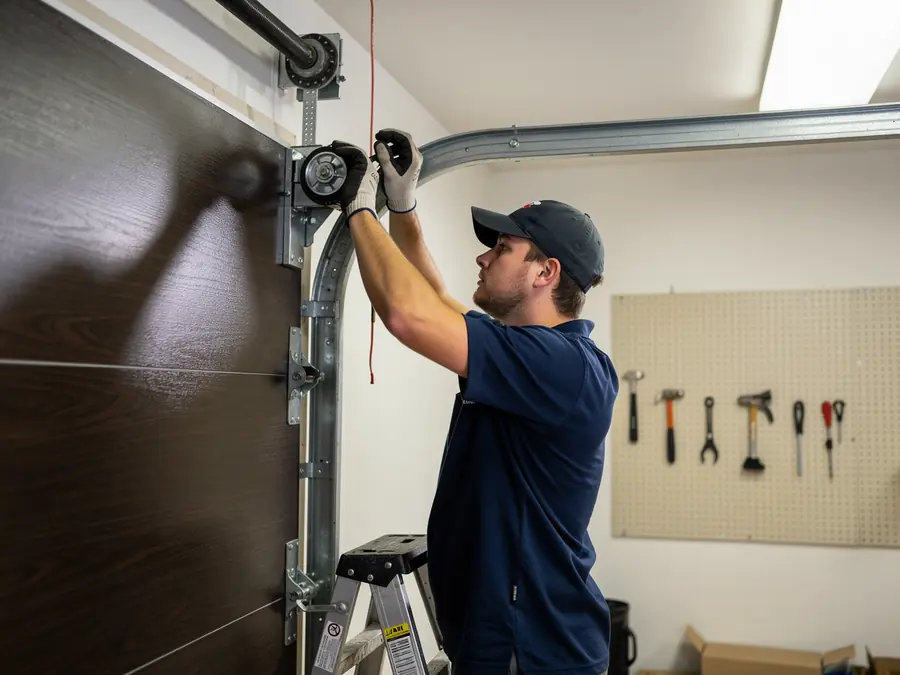
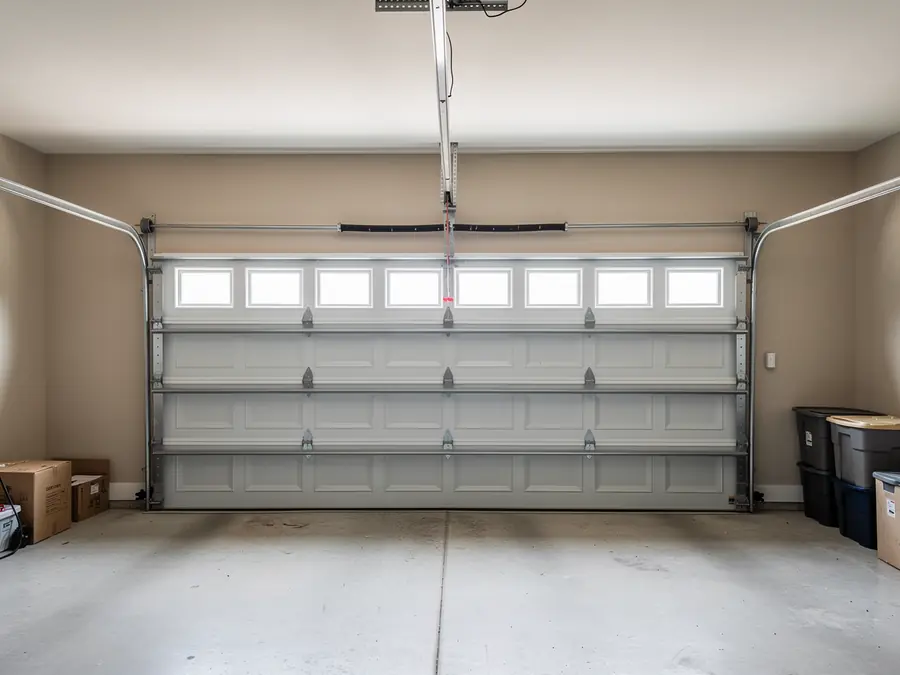
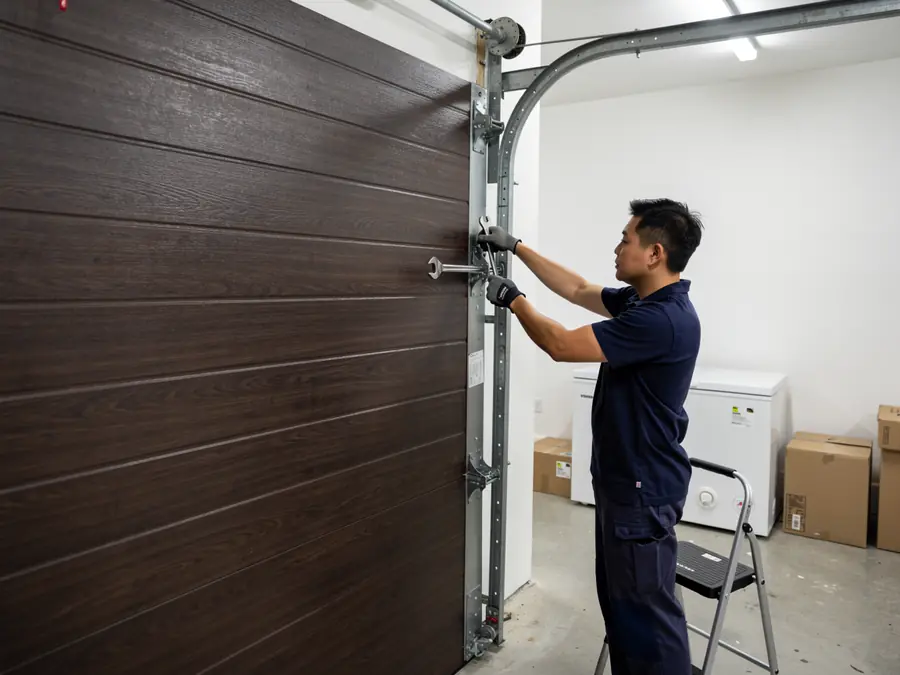
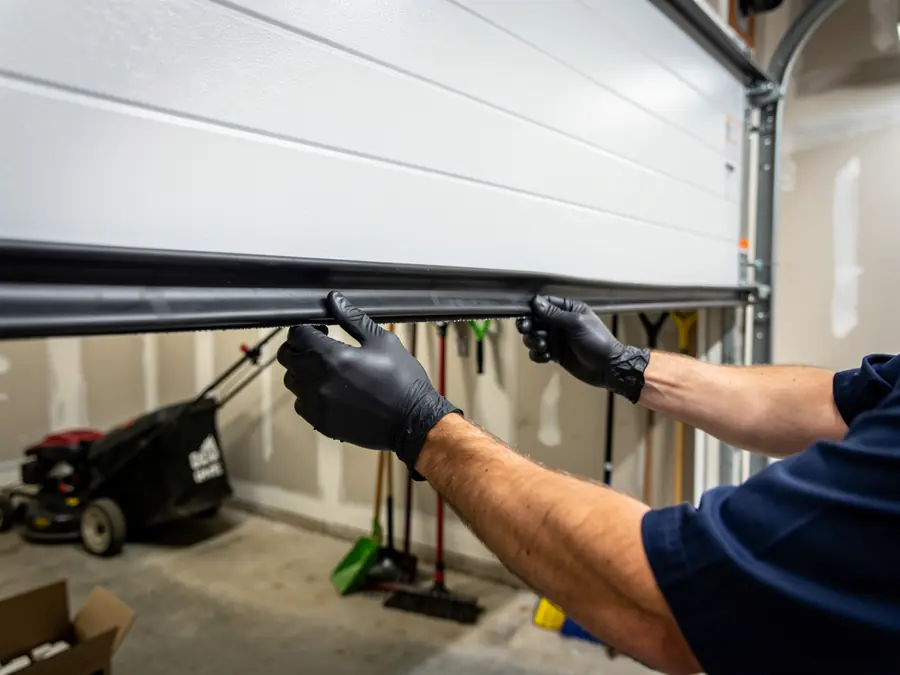
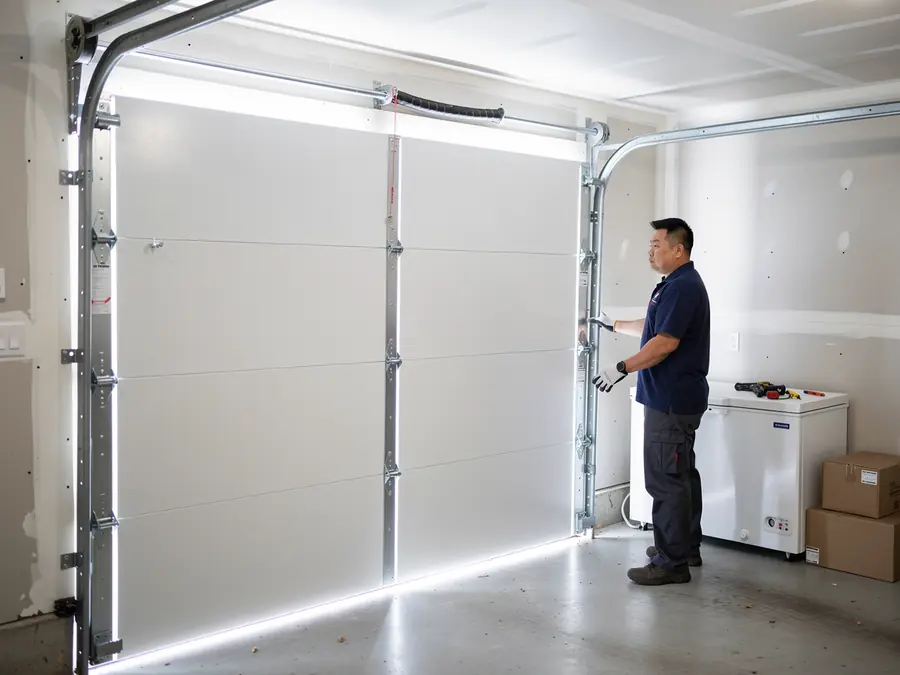
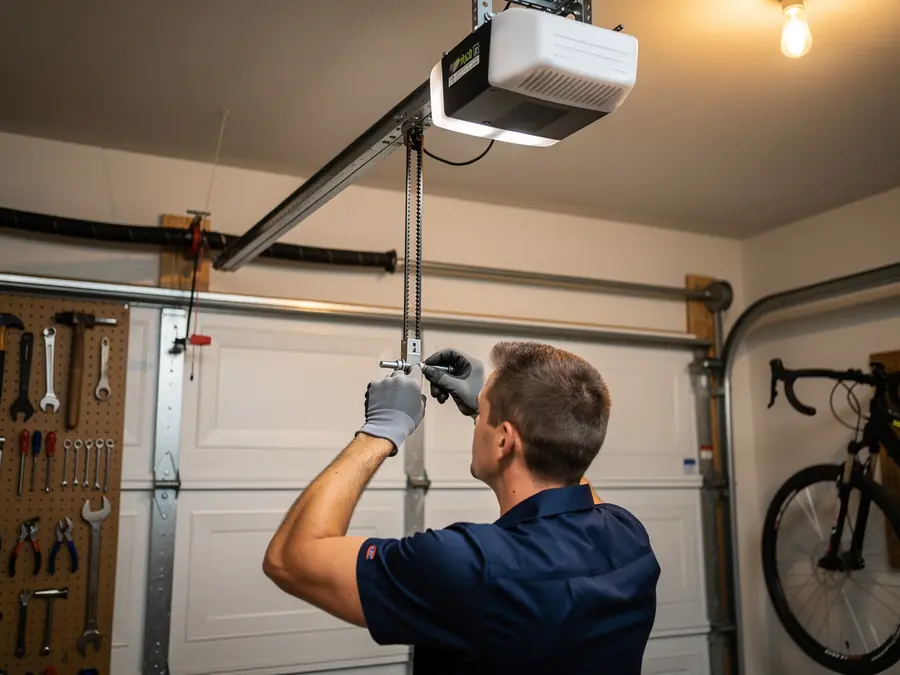
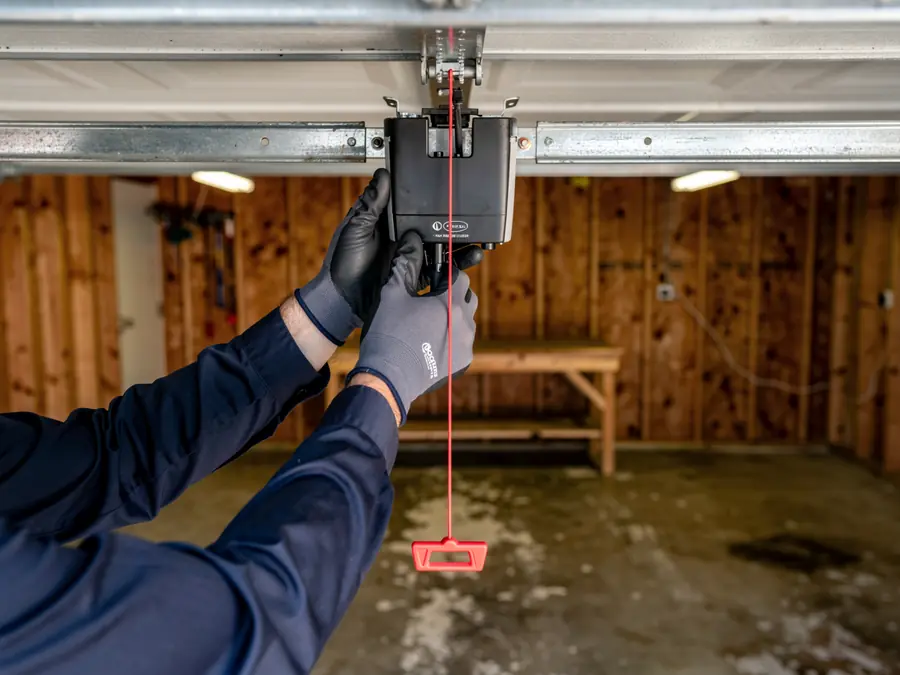
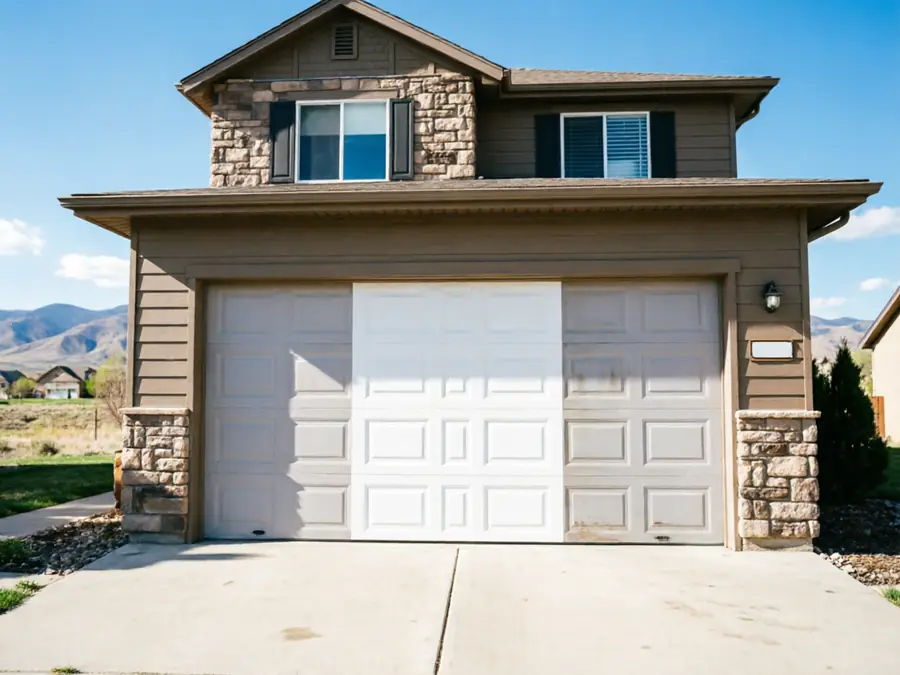
Athol is a 17-mile drive from our shop in Coeur d'Alene, which is the first thing that shapes how a roller call here actually goes - we're not swinging by on the way to another job, we're coming out for yours. That drive matters less for the diagnosis than you'd think, because the failure itself is predictable once you know the housing stock. Most of Athol's homes date to around 1992, squarely inside the service area's broader 1950-2003 build range, and that era leaned hard on nylon rollers with stamped-steel stems riveted or bolted to the door section. Thirty-plus years of track travel wears the nylon wheel down to a flat spot long before the stem itself gives out, and in a cold-moderate climate like this one, the grease inside that wheel stiffens every winter and speeds up the wear. You'll hear it before you see it: a rhythmic thunk as the flat spot hits the track on every rotation. Left alone, the worn wheel starts chewing at the track flange, and what started as a $20 part turns into a track replacement. Athol only has about 295 households, so this isn't a problem we see in volume out here the way we might in a denser pocket closer to town - but the houses that do have it have it for the same reason every time.