Blog
The Doors Coeur d'Alene Built Before Insulation Rules Caught Up
Coeur d'Alene homes built 1950-2003 often still have original uninsulated steel doors. Here's what that means for cold-weather performance and when to replace one.
When to Call Someone
Most of the housing stock around Coeur d'Alene went up between 1950 and 2003, with the median sitting around 1995 and a heavy concentration from the 1980s and 90s spread across the six areas that make up this service area - Dalton Gardens, Hayden, Rathdrum, Harrison, Athol, and Spirit Lake all carry a similar mix. That matters because garage door insulation didn't become a standard expectation until later in that window. If your door is original to a house built before the mid-90s, there's a good chance it's a single steel skin with nothing behind it - no foam, no vapor barrier, just metal. Call someone when that door starts sagging between panels, when the bottom seal is cracked and daylight shows through, or when it's noticeably louder and colder to stand next to than the rest of the garage. Those are signs the skin has outlived what it was built to do, not just a worn weatherstrip.
What the Weather Here Does to It
Coeur d'Alene sits in a cold, moderate climate band, which means freeze-thaw cycling through the winter months and condensation swings the rest of the year. An uninsulated steel door doesn't buffer any of that - it's the same temperature inside as out, so moisture beads on the inside face and runs down into the bottom bracket and hinges. On the 1980s and 90s stock that makes up most of this area, that's three or four decades of that cycle on hardware that was never meant to handle it long term. You'll see it first as rust streaks at the hinge points and a bottom panel that's started to bow. Once the steel skin flexes enough times in the cold, it stays flexed, and the door stops tracking straight even with good rollers and a tuned opener.
Leaving It Alone
Here's the honest part: insulating an old single-skin door after the fact with a kit doesn't fix the core problem. The foam helps some with temperature, but it doesn't add back the rigidity the panel lost from decades of flex, and it doesn't stop the rust that's already started at the brackets. On a door that's been standing since the house was built in that 1950-2003 window, you're often better off replacing the section than layering insulation onto a skin that's already fatigued. We won't sell a kit onto a door that's past the point where it does any good - that's wasted money. If the door is still tracking true and the steel is solid, insulating it is worth doing. If it's already sagging, it isn't.
The Problem
The real issue isn't cosmetic, it's structural and it's about timing. Doors built before insulated construction became standard were designed as a barrier, not a seal - they kept rain and animals out, not cold air. In a cold moderate climate like this one, that gap shows up as a garage that runs ten or more degrees colder than the house, condensation dripping onto parked cars, and a steel panel that's working harder than it was engineered for every winter it stays in service. With median household income in this area around $80,954 and roughly 7,960 owner-occupied houses on the local rolls, replacing an original door with a properly insulated one is a reasonable project for a lot of owners here - not a luxury upgrade, just catching the house up to a standard that didn't exist when it was built.
Questions
Common questions
How do I know if my garage door is insulated or not
Knock on it. A single steel skin sounds hollow and thin, almost tinny. An insulated door sounds dull and solid because there's foam behind the steel. If your house was built before the mid-1990s and the door looks original, it's very likely uninsulated.
Is it worth insulating an old door instead of replacing it
Only if the panel itself is still straight and the steel hasn't started to rust or bow. If the door is tracking well and just cold, a kit can help. If it's already sagging or flexing at the seams, insulation won't fix that and replacement is the better spend.
Why does my garage door sweat in the winter
That's condensation forming on an uninsulated steel panel because the inside face is the same temperature as the outside air. It's common on older doors in this climate and usually gets worse at the bottom panel where cold air pools.
Recommendation
You Might Also Like
More garage door guides for Coeur d'Alene homeowners.
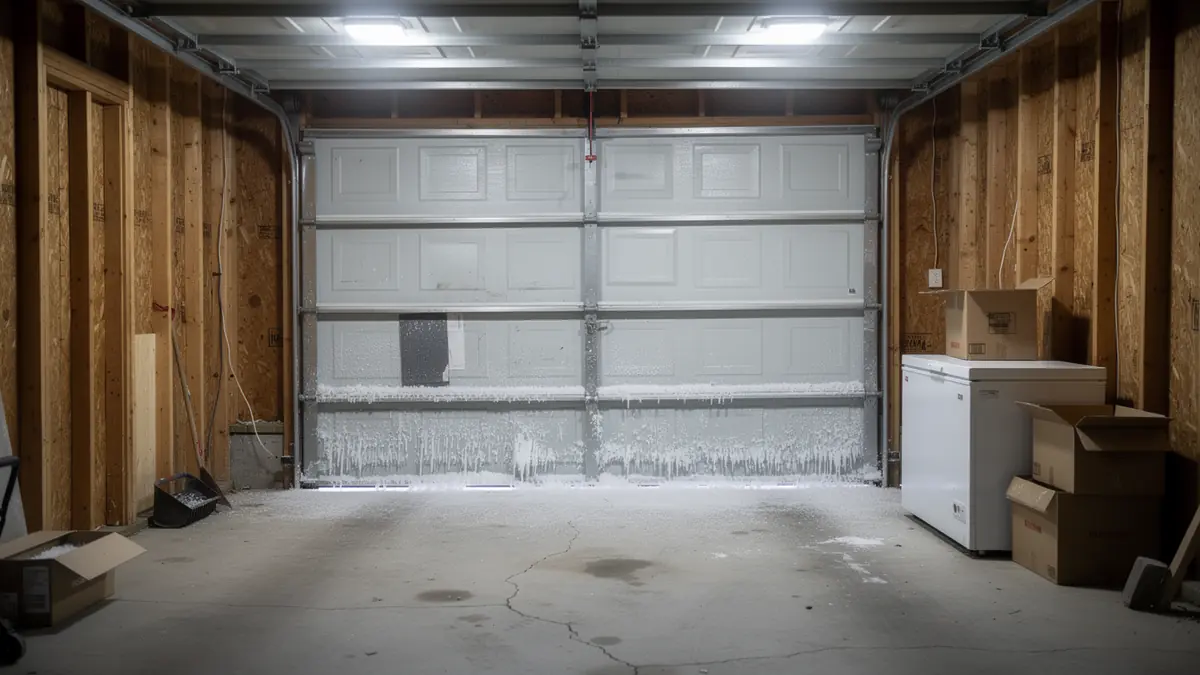 Is Your Older Garage Door Still Worth Fixing
Most Coeur d'Alene homes date from the 1980s and 90s.
Is Your Older Garage Door Still Worth Fixing
Most Coeur d'Alene homes date from the 1980s and 90s.
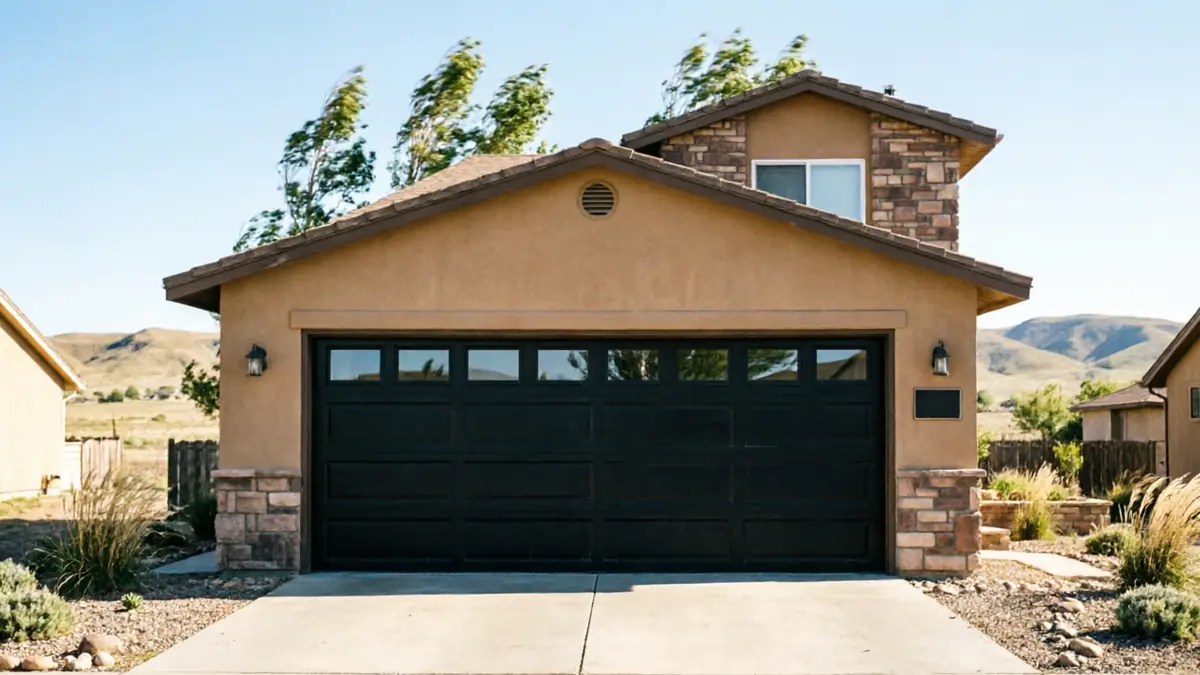 A Broken Spring in Cold Weather, Explained for Coeur d'Alene Homes
Why cold snaps in Coeur d'Alene snap torsion springs on 1980s-90s doors, what to do when it happens, and when calling it in beats waiting it out.
A Broken Spring in Cold Weather, Explained for Coeur d'Alene Homes
Why cold snaps in Coeur d'Alene snap torsion springs on 1980s-90s doors, what to do when it happens, and when calling it in beats waiting it out.
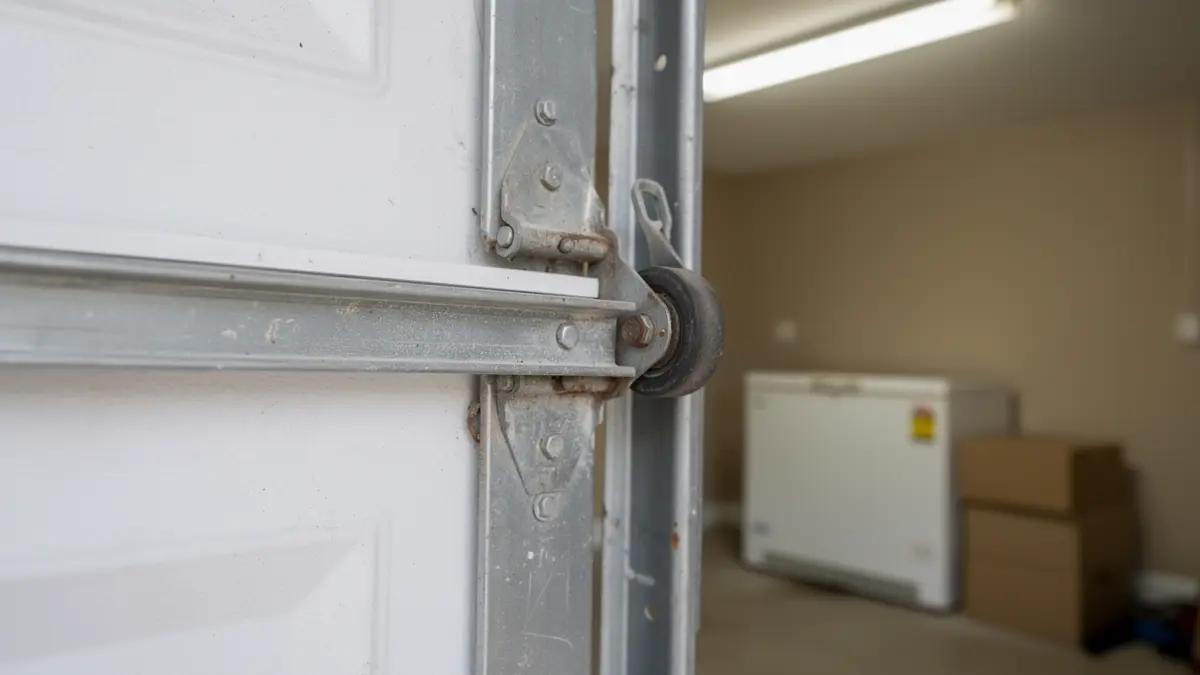 Openers, Power Cuts, and the Coeur d'Alene Housing Stock
Most Coeur d'Alene openers date to the 1980s-90s housing boom and predate battery backup.
Openers, Power Cuts, and the Coeur d'Alene Housing Stock
Most Coeur d'Alene openers date to the 1980s-90s housing boom and predate battery backup.
Ready when you are
Need a garage door sorted in Coeur d'Alene?
Coeur d'Alene Garage Door Pros repairs and installs garage doors, springs and openers in Coeur d'Alene, ID and the surrounding area.