
Blog
A Broken Spring in Cold Weather, Explained for Coeur d'Alene Homes
Why cold snaps in Coeur d'Alene snap torsion springs on 1980s-90s doors, what to do when it happens, and when calling it in beats waiting it out.
When to Call Someone
If the door won't move, or it moves a few inches and stops, and you hear a bang from the garage before any of that - that's a torsion spring letting go. Don't try to force the door up by hand or with the opener. The opener isn't built to lift a door without spring tension, and you'll burn out the motor or worse.
Most of the housing stock out here went up between 1950 and 2003, with the bulk from the 1980s and 90s across the six main areas of the service territory. That means a lot of these are original torsion setups now pushing 30-40 years old, and cold makes old steel brittle before it makes it fail outright. If your door is from that era and it's been sluggish the last few mornings, that's not nothing.
Call when: the door won't open at all, one side sags lower than the other, or you hear a loud pop and then dead silence from the spring area. Don't wait for a second spring to go before you get someone out - on a two-spring door, one usually follows the other within days once the slack shifts the load.
We don't do same-day miracle promises here, and if a part needs ordering for an older door, that's a real wait, not a sales line.
What the Weather Here Does to It
Coeur d'Alene sits in a cold-moderate climate band, and that swing matters more to a torsion spring than most people think. Steel contracts in the cold, and a spring that's already fatigued from 20+ winters of that cycle is more likely to let go on the coldest mornings than on a mild afternoon in July.
It's not that cold alone breaks springs - it's cold plus age plus the daily cycling the spring's already done. A spring wound in 1995 and still running has absorbed three decades of this same freeze-thaw stress every winter. Each cold snap is one more cycle closer to the metal fatigue point, and the failure itself tends to happen fast, with no warning beyond maybe a slightly stiffer door the day before.
This is why spring failures cluster here in the coldest stretch of the year rather than spreading evenly across the seasons. If your door is original to a house built in that 1980s-90s window, the spring has already done more work than the warranty sticker ever accounted for.
Leaving It Alone
A door that's hard to lift but still moves is not a problem you fix by lifting harder or helping the opener along. That's the fastest way to turn a spring job into a spring-plus-track-plus-opener job. The spring carries almost all the weight of the door; once it's gone or going, everything downstream - cables, rollers, the opener's drive gear - is taking strain it was never built for.
If you've got a two-car door original to a house from the 1980s or 90s and it's starting to feel heavier in the cold, that's worth looking at before it fails on its own schedule, usually at the worst possible moment - cold morning, car trapped inside, you already late.
There's a limit to what's worth fixing versus replacing. A spring on its own is a straightforward repair. But if the door itself is original from that same era and showing wear in the track and hinges too, putting a new spring on an old frame sometimes just moves the next failure down the road a year. That's a judgment call worth having someone look at in person, not guess at over the phone.
The Problem
The real issue isn't any single cold morning - it's the math of how many doors around here are the right age to fail on one. With roughly 7,960 owner-occupied houses across a service area built mostly between 1950 and 2003, median year 1995, a large share of garage doors are sitting right in the window where original hardware starts giving out, and winter is when that shows up.
Median household income in the area runs around $80,954, which tells you most of these aren't deferred-maintenance houses - they're kept-up properties where a spring failure is more likely to get handled than ignored. That's a good thing, because an ignored broken spring doesn't stay a one-part problem for long.
The towns nearby - Dalton Gardens two miles out, Hayden at four, Rathdrum at eight - share the same cold-moderate winters and roughly the same era of housing stock, so the same failure pattern shows up across that whole stretch, not just in one neighborhood.
Questions
Common questions
Why did my garage door spring break on such a cold morning?
Cold steel is more brittle than warm steel, and a torsion spring that's already fatigued from years of daily cycling is more likely to reach its breaking point on the coldest mornings of the year. If your door and spring are original to a house built in the 1980s or 90s, that spring has already absorbed decades of this same seasonal stress.
Can I open the door myself if the spring is broken?
You can lift it manually in short bursts if you absolutely have to get a car out, but don't rely on the opener to do it - without spring tension, the opener is lifting the full weight of the door and that burns out the motor fast. Treat it as a one-time move, not a workaround.
Is it normal for both springs to break around the same time?
On a two-spring door, yes, it's common for one to follow the other within days once the first one lets go - the remaining spring is suddenly carrying the whole load it wasn't sized for. If one goes, it's worth having the other checked rather than waiting for it to fail too.
Recommendation
You Might Also Like
More garage door guides for Coeur d'Alene homeowners.
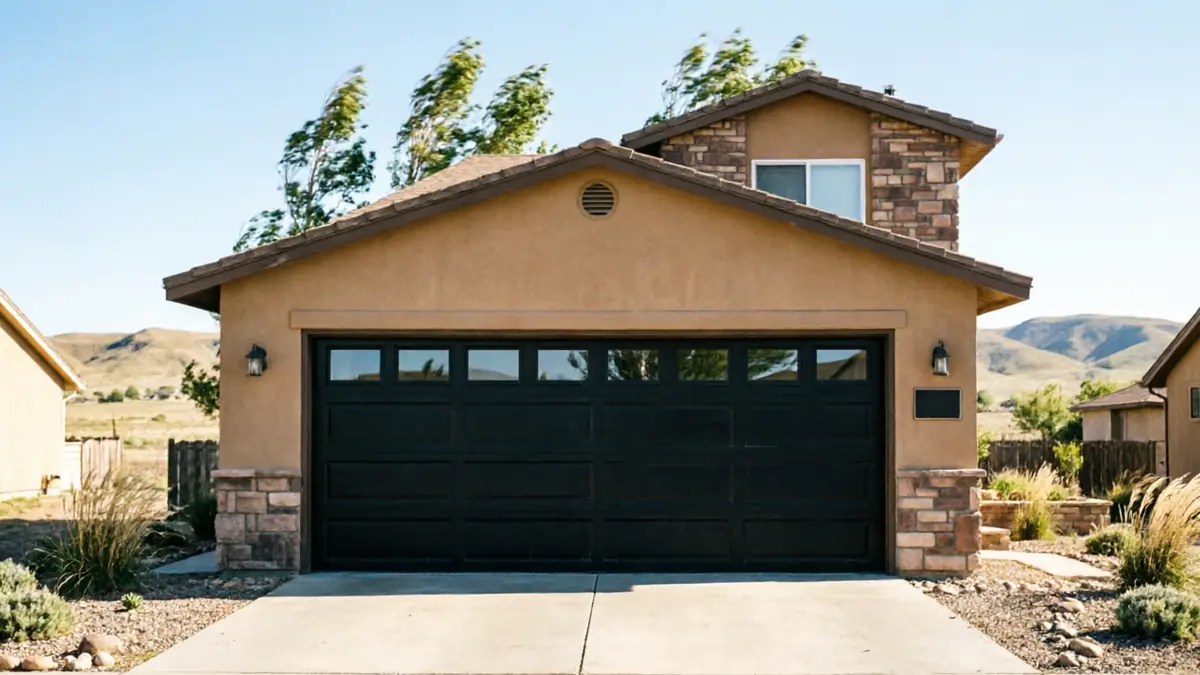 The Doors Coeur d'Alene Built Before Insulation Rules Caught Up
Coeur d'Alene homes built 1950-2003 often still have original uninsulated steel doors.
The Doors Coeur d'Alene Built Before Insulation Rules Caught Up
Coeur d'Alene homes built 1950-2003 often still have original uninsulated steel doors.
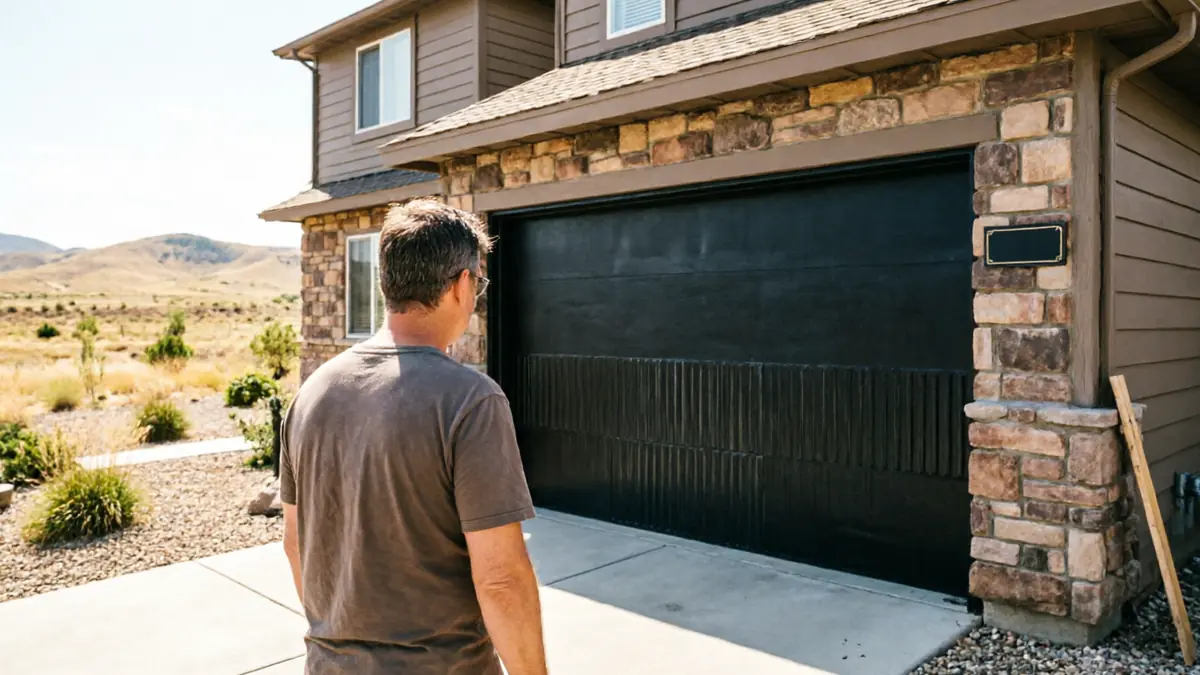 What a Service Call Actually Covers in Coeur d'Alene
A real service call in Coeur d'Alene checks spring age against 1980s-90s housing stock, winter wear on tracks and seals, and whether repair beats replacement.
What a Service Call Actually Covers in Coeur d'Alene
A real service call in Coeur d'Alene checks spring age against 1980s-90s housing stock, winter wear on tracks and seals, and whether repair beats replacement.
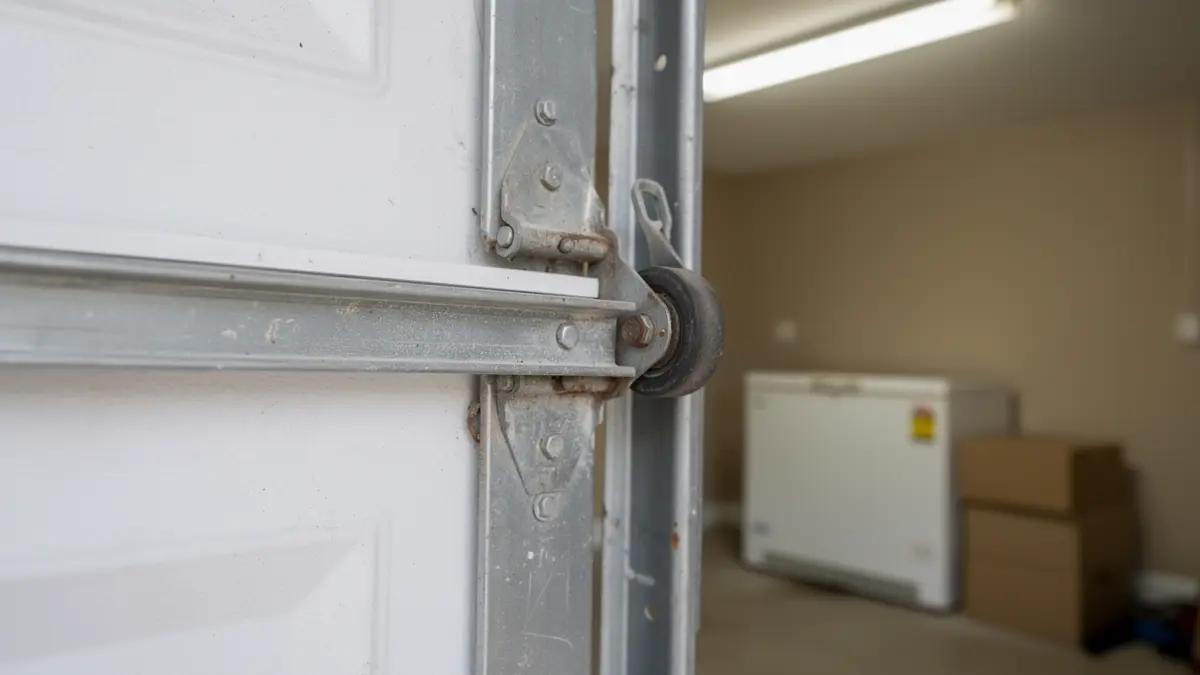 Openers, Power Cuts, and the Coeur d'Alene Housing Stock
Most Coeur d'Alene openers date to the 1980s-90s housing boom and predate battery backup.
Openers, Power Cuts, and the Coeur d'Alene Housing Stock
Most Coeur d'Alene openers date to the 1980s-90s housing boom and predate battery backup.
Ready when you are
Need a garage door sorted in Coeur d'Alene?
Coeur d'Alene Garage Door Pros repairs and installs garage doors, springs and openers in Coeur d'Alene, ID and the surrounding area.