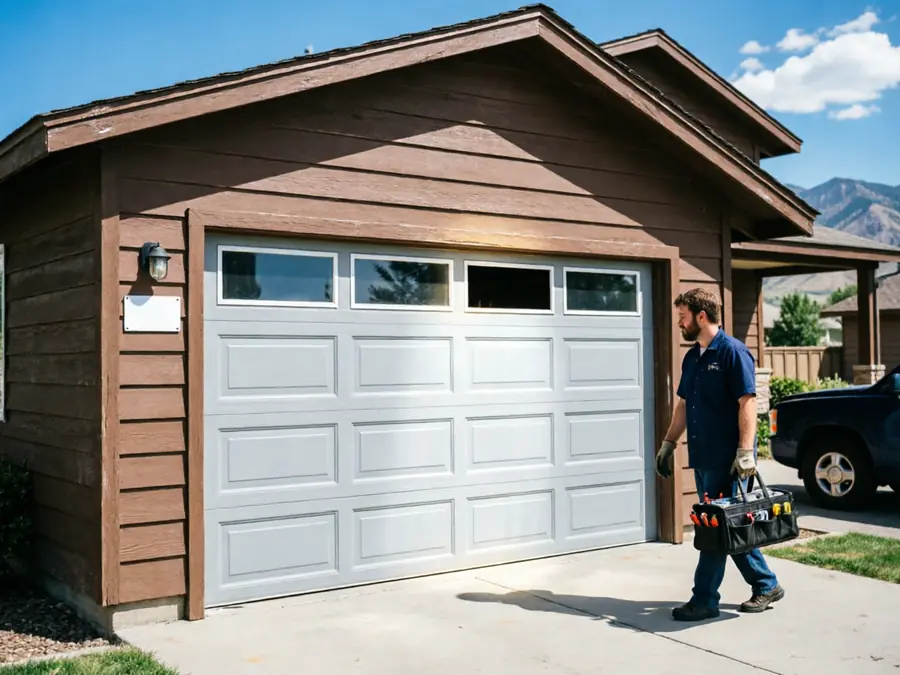
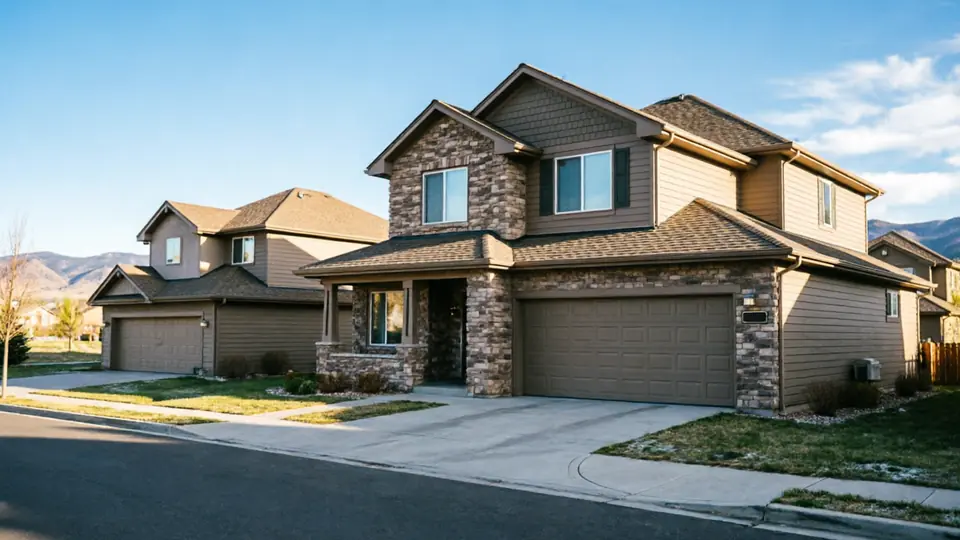
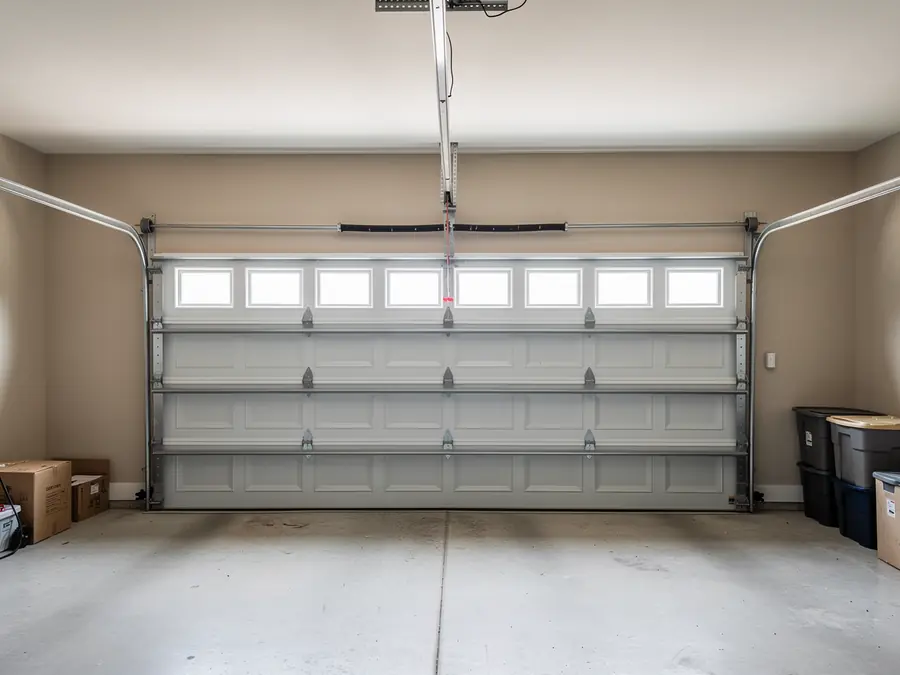
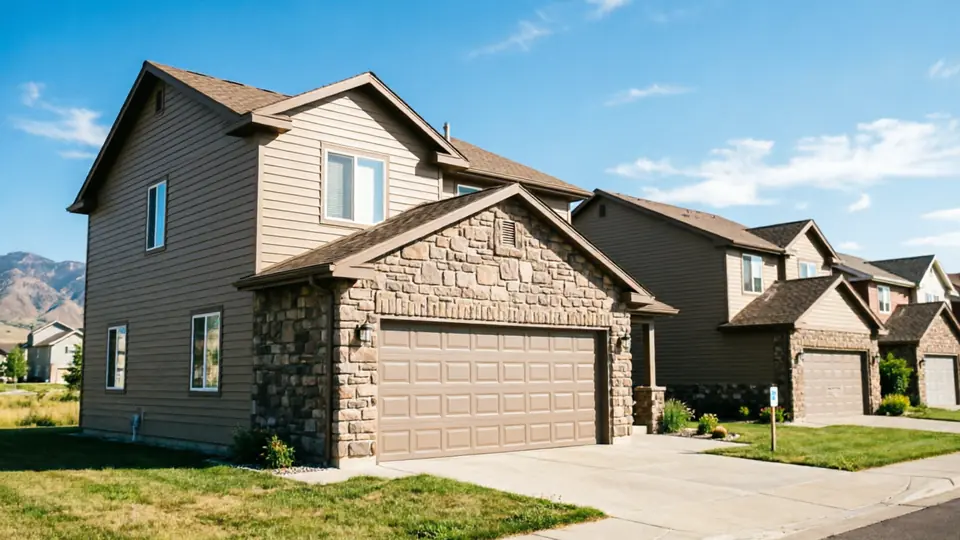
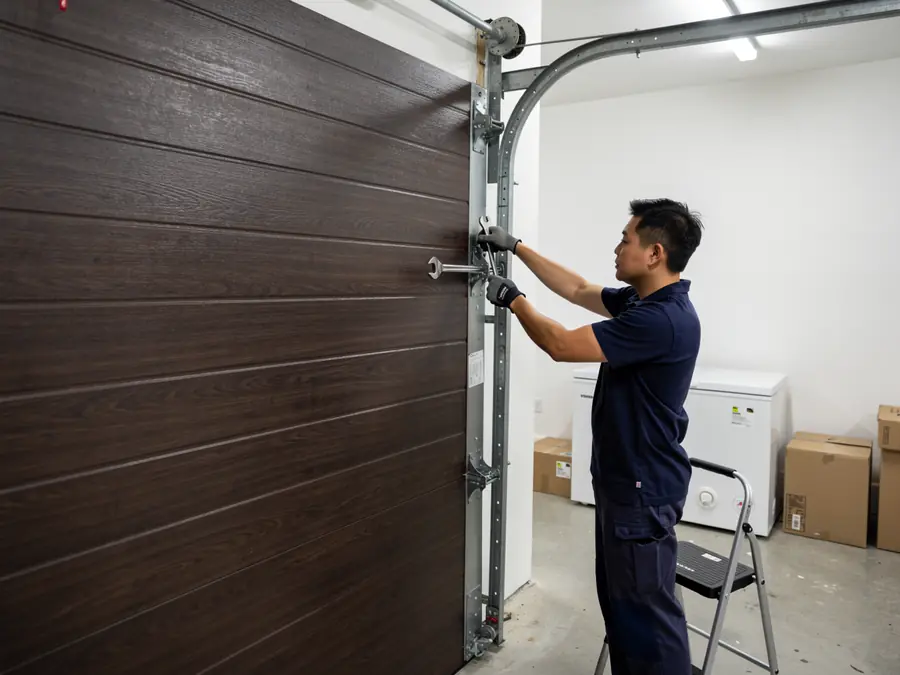
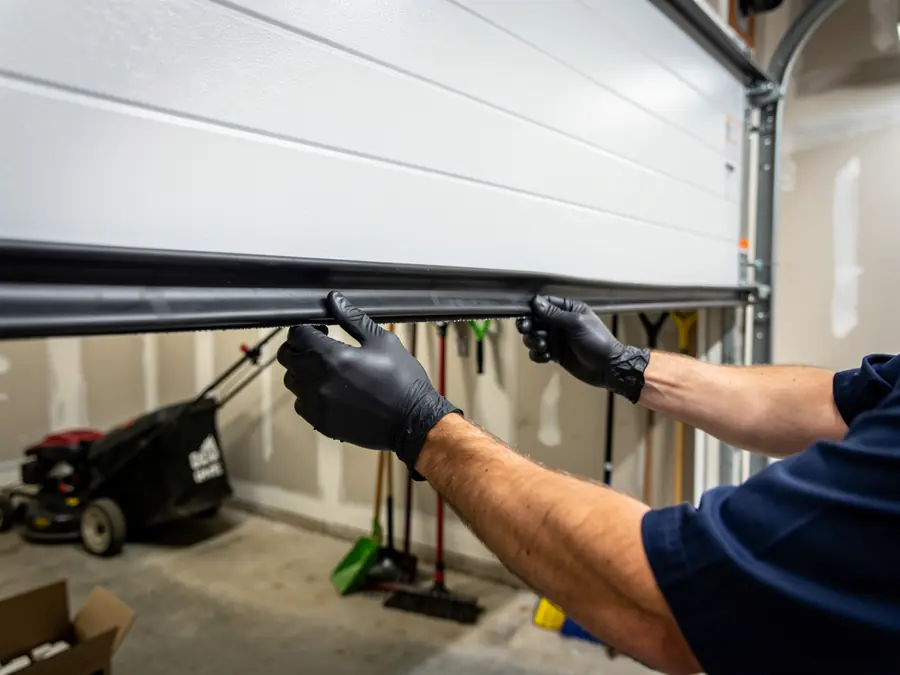
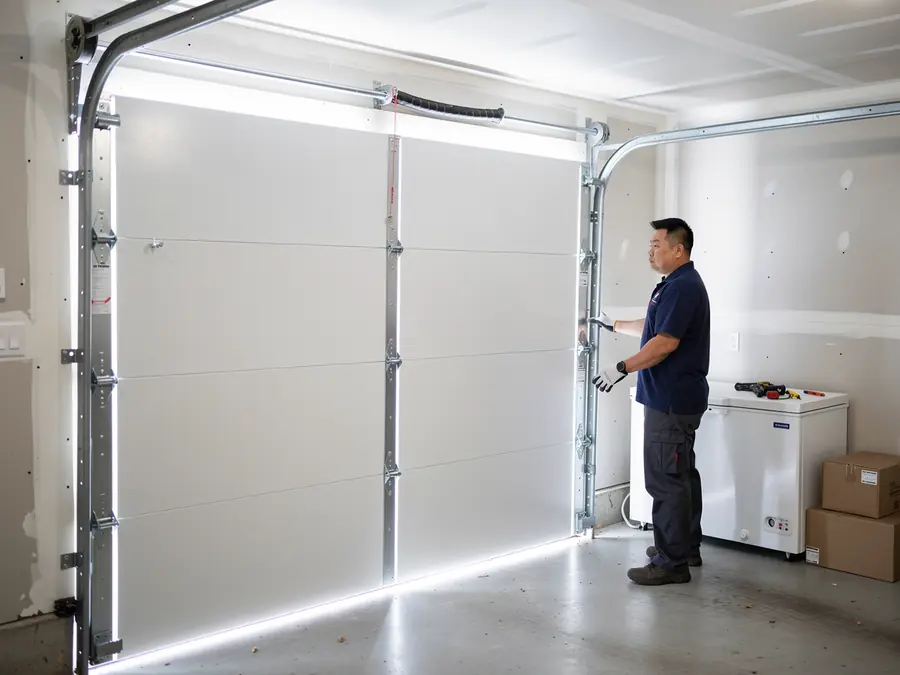
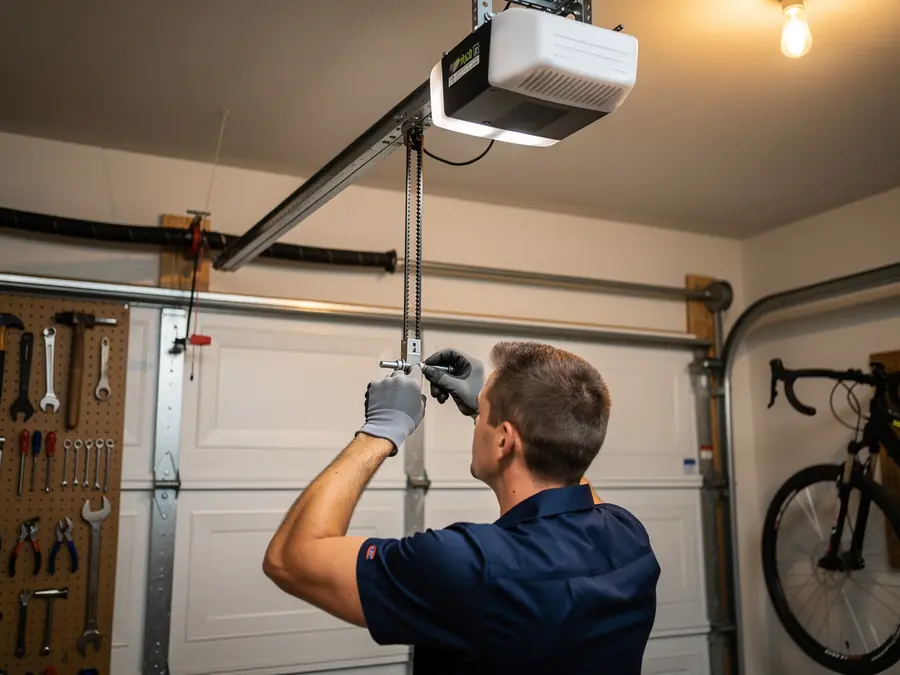
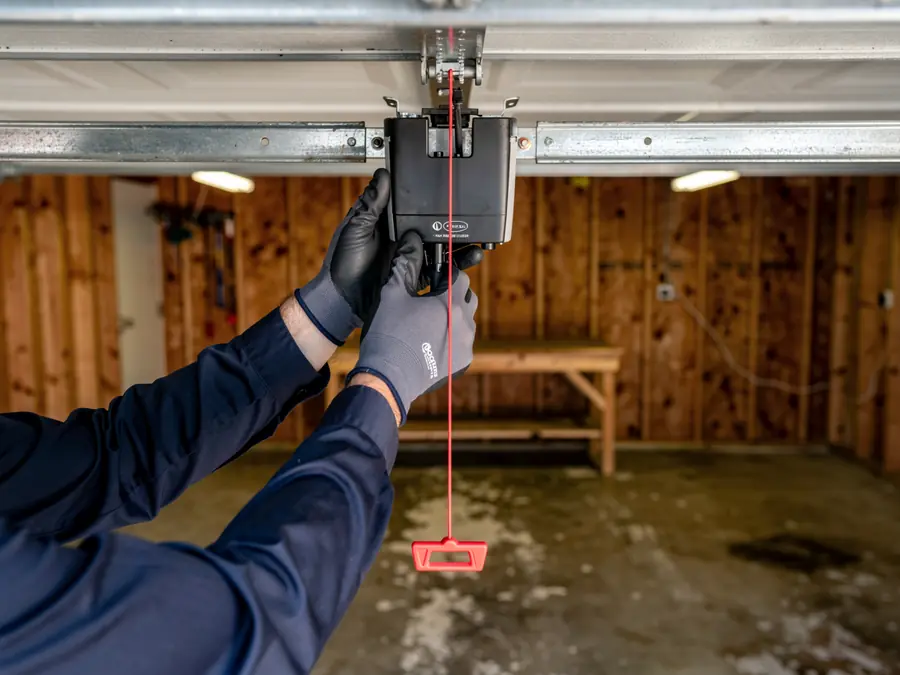
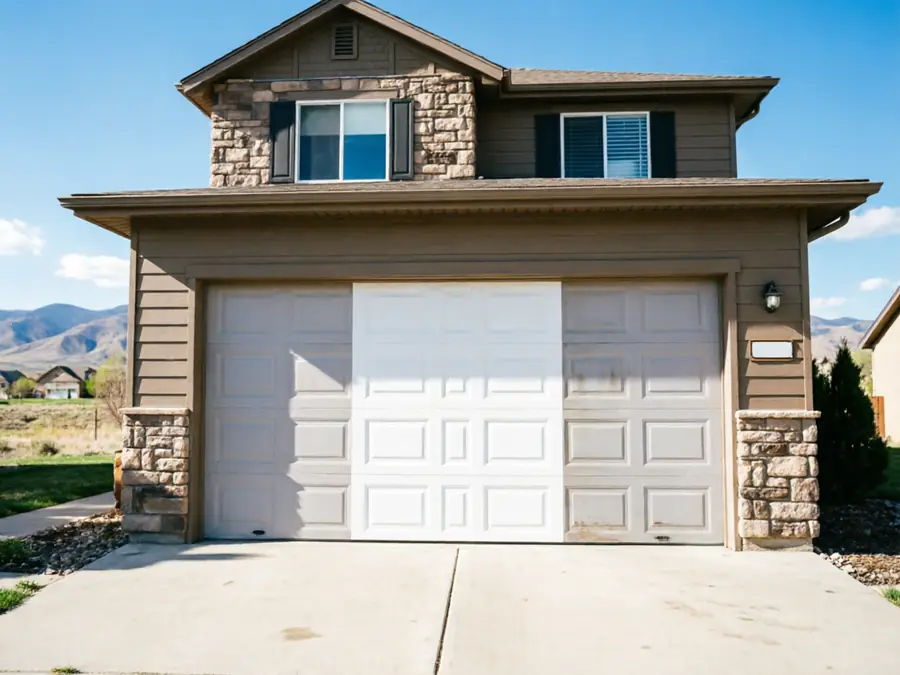
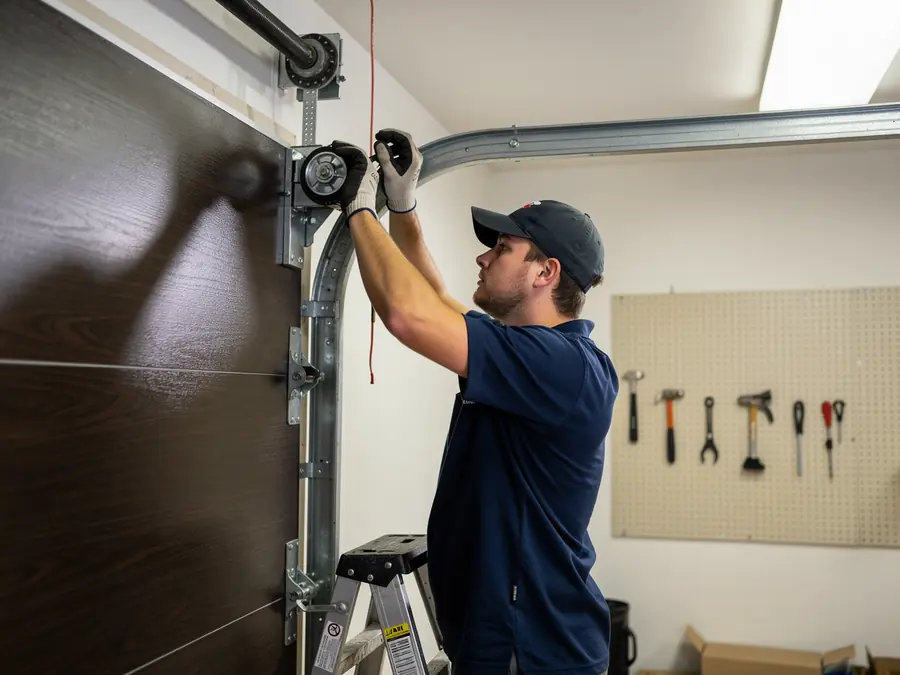
On newer builds, the common failure isn't the ancient one-piece door with side-mount torsion hardware we see on 1960s stock closer to Coeur d'Alene. It's extension springs stretched past their rated cycle count, or a torsion spring sized for a lighter steel door that's been loaded down with an insulated retrofit panel. Openers from this era are mostly chain or belt drive with a photo-eye safety sensor pair - when those sensors go out of alignment from a bumped ladder or a shifted track, the door won't close at all, which reads as an emergency even though the fix is usually a five-minute adjustment, not a broken spring. Rollers on 2000s-era doors are more often nylon than the steel rollers on older stock, and they wear out quieter - you often don't know a roller's failing until the track binds mid-cycle. None of this is unique to one house, but it's the pattern that shows up more in a build-year-2003 neighborhood than in an older one.