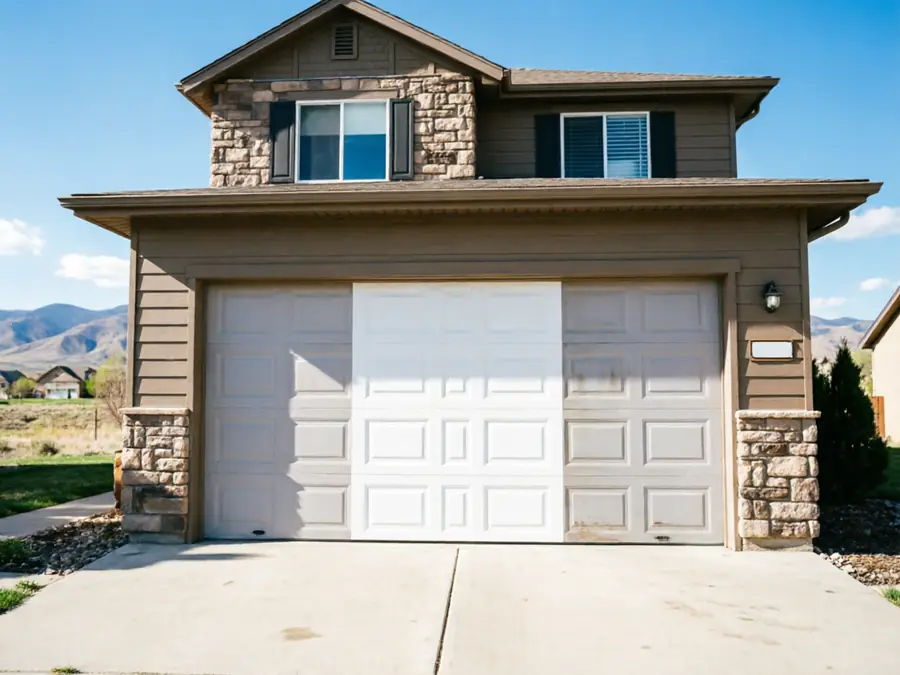
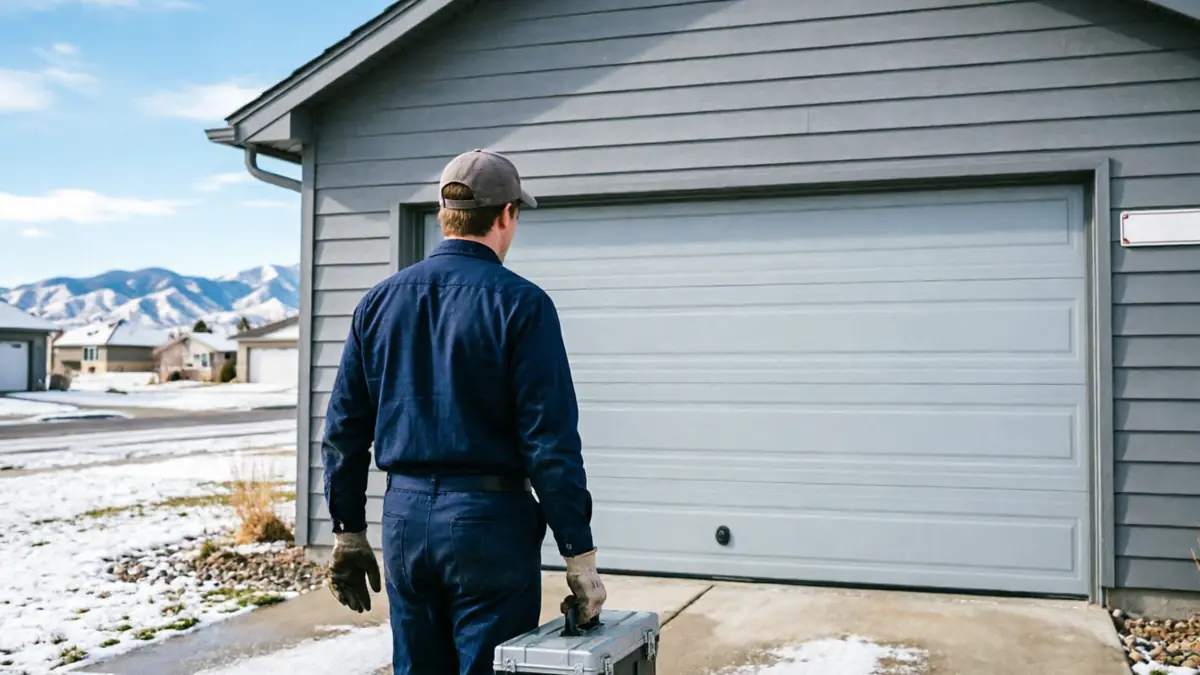
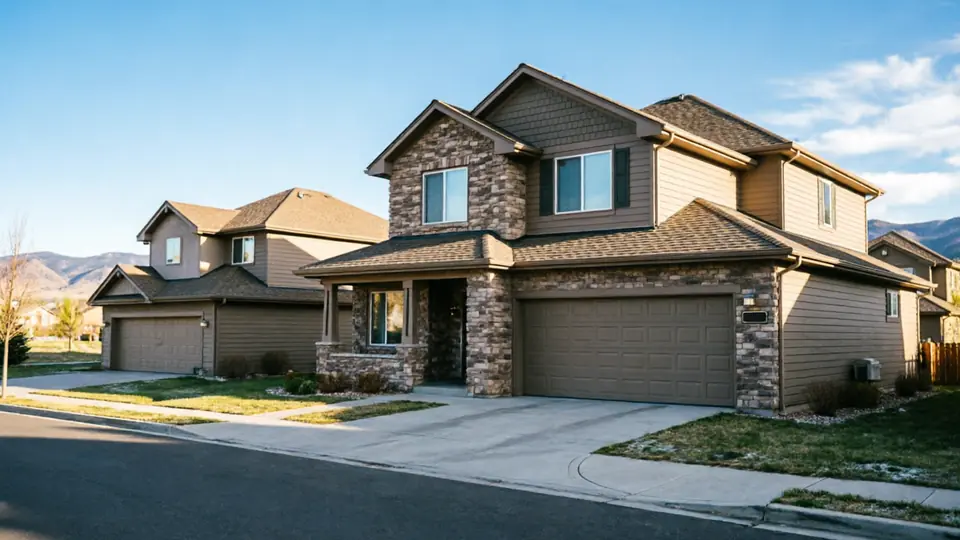
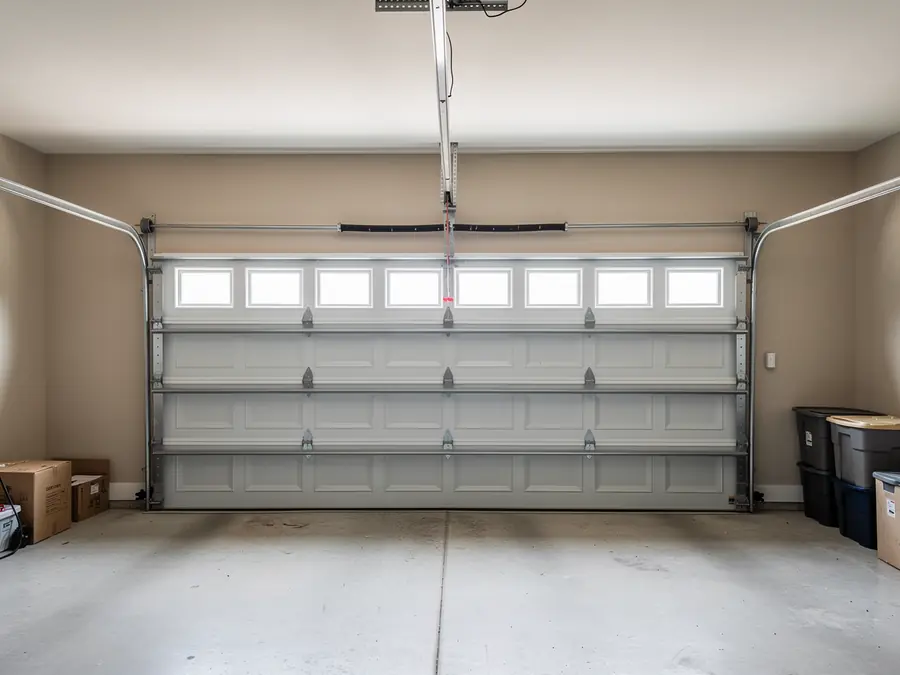
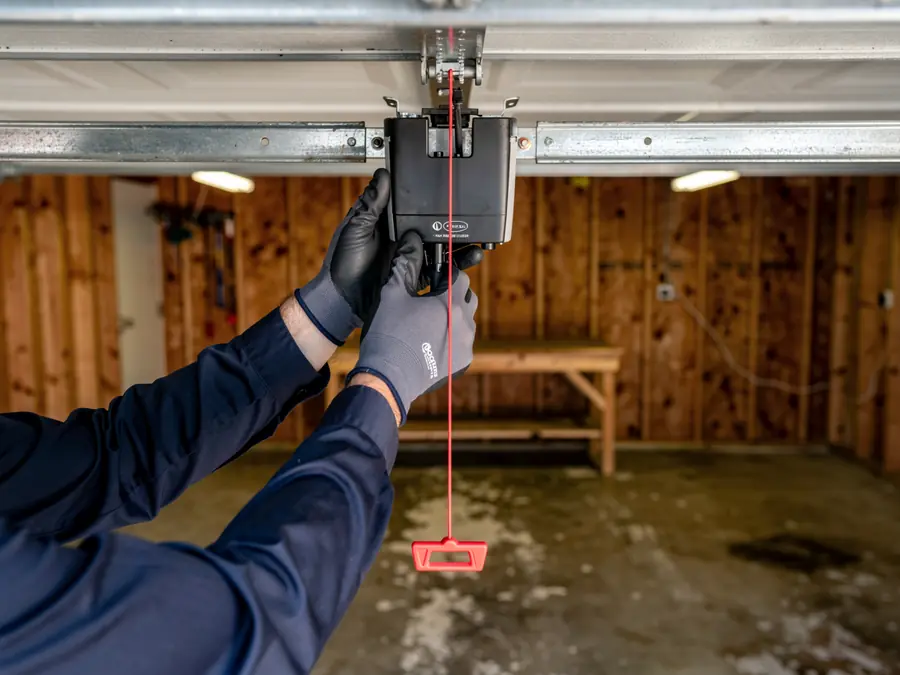
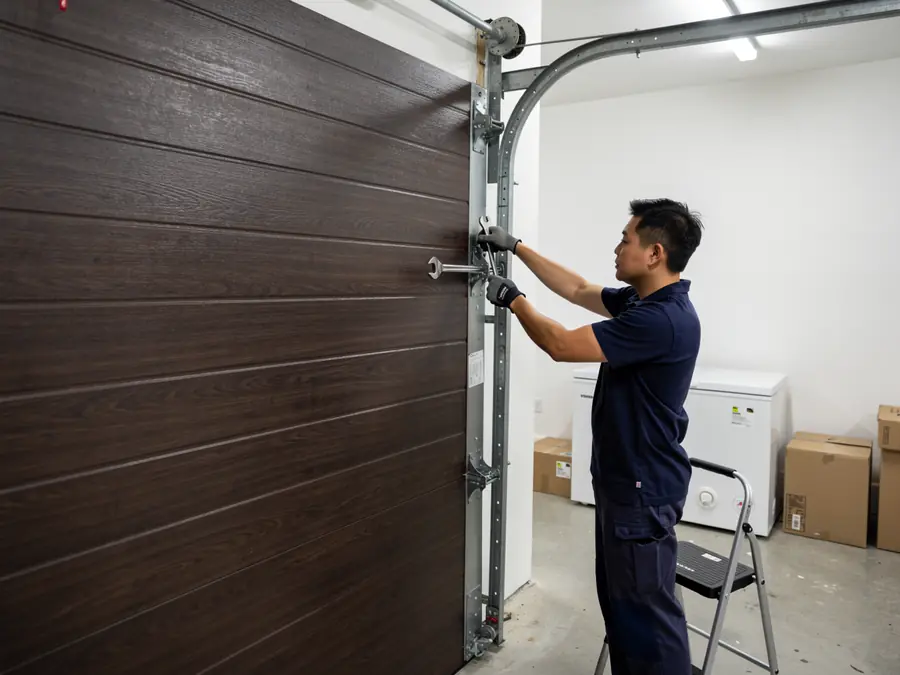
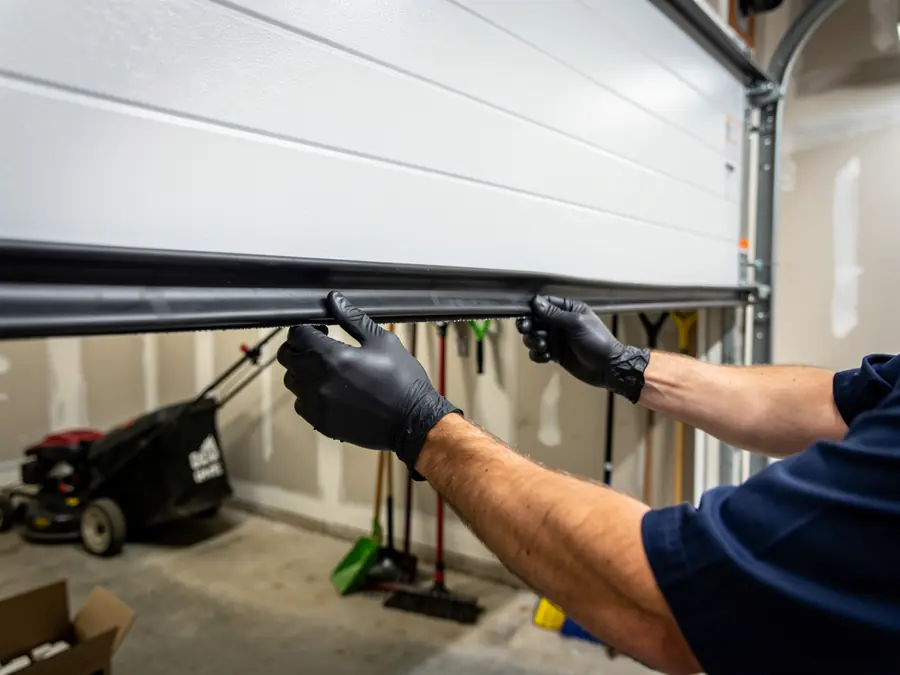
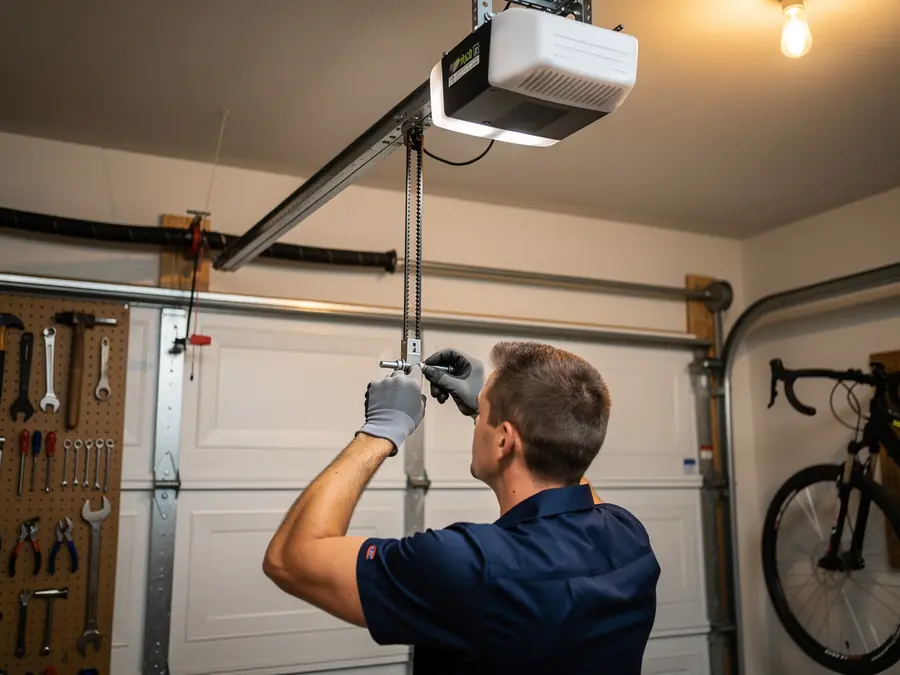
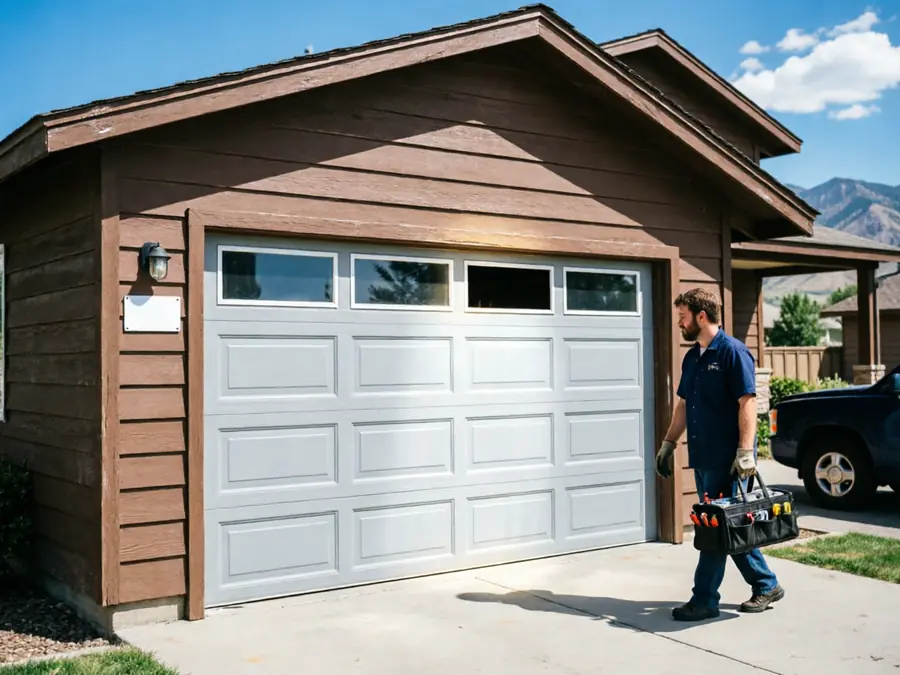
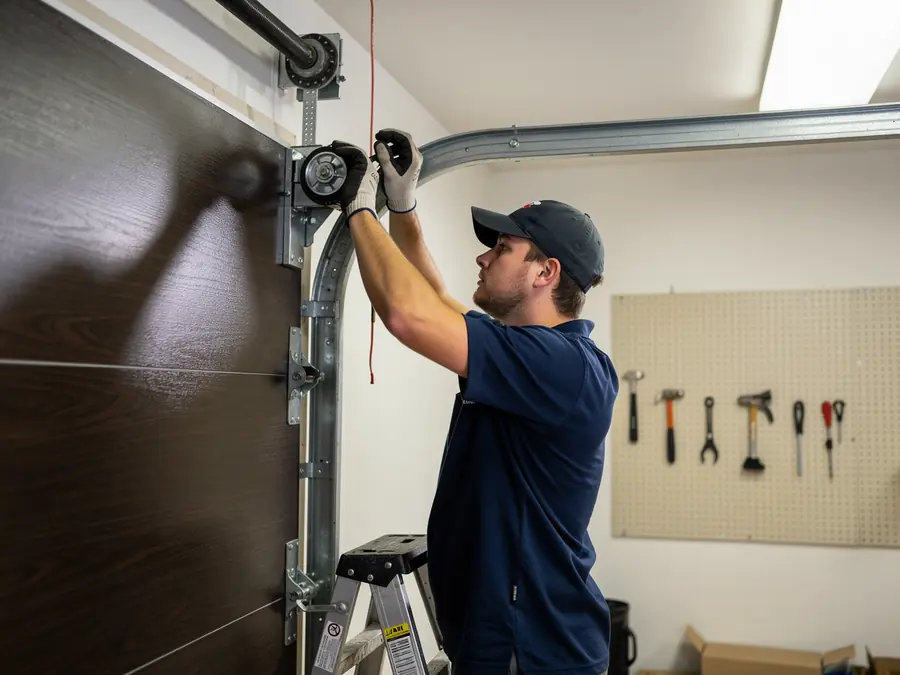
A lot of what we work on here went up between 1950 and 2003, with the bulk of it from the 1980s and 90s across the six main areas we cover. That generation of garage doors used thinner steel skins than what's sold today, and the panels were hung on tracks that weren't built with today's insulation standards in mind. In a cold-moderate climate like ours, steel panels contract hard overnight and expand through the day. That cycle, repeated for thirty-plus winters, works the seams and fasteners loose long before the door itself is worn out.
Add in the freeze-thaw swing that's normal here, and a panel that's already got a hairline crack from an old impact will widen that crack every time the temperature drops. We see this most on doors that are original to the house - the steel hasn't been replaced since it left the factory, and the gauge just wasn't made to take forty winters of this kind of temperature swing. It's not a defect in any one door. It's what happens to 1980s and 90s steel in a climate that works it this hard, year after year.