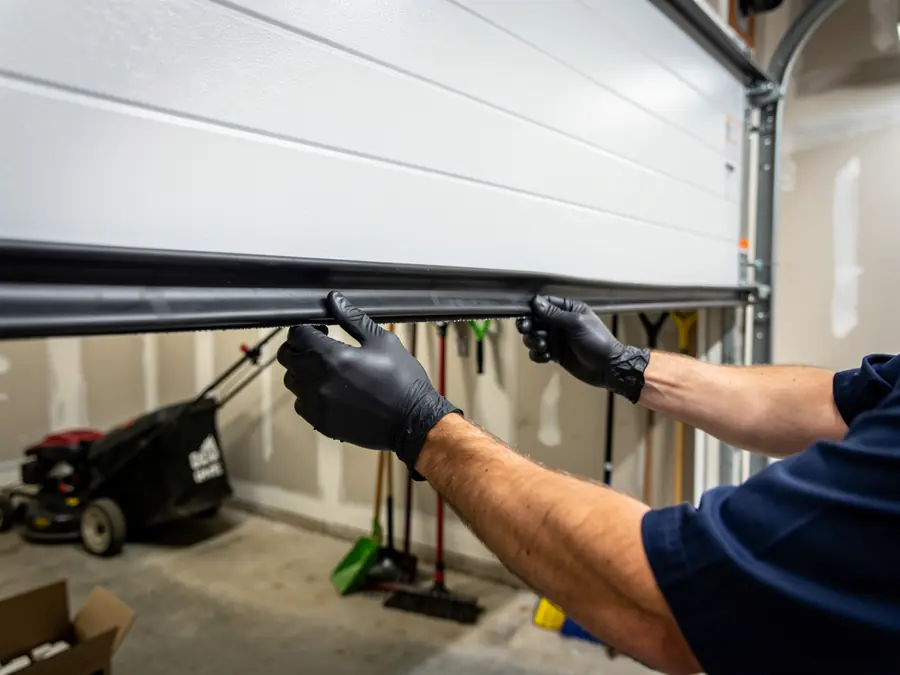
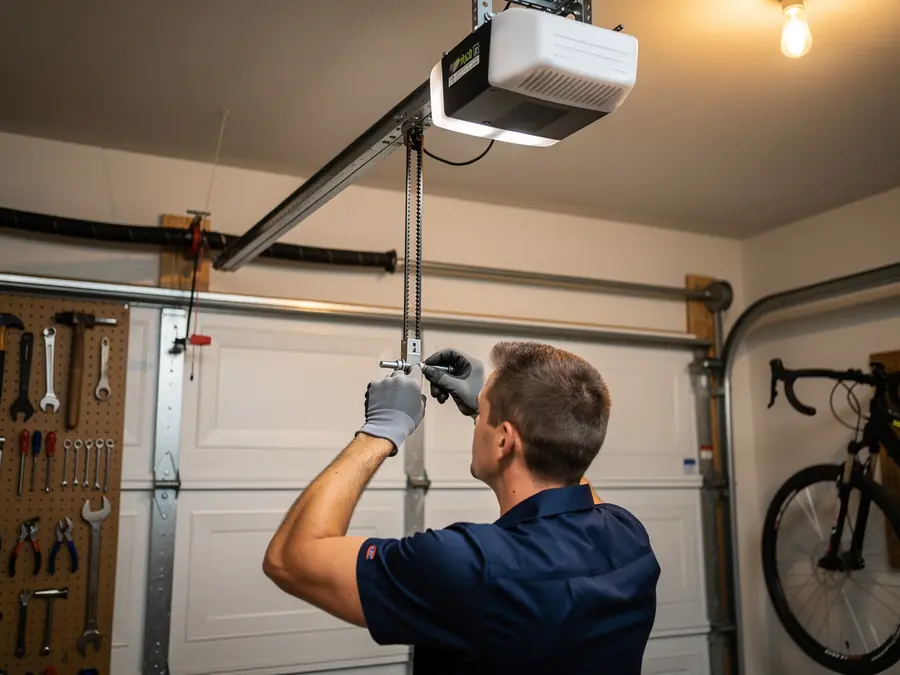
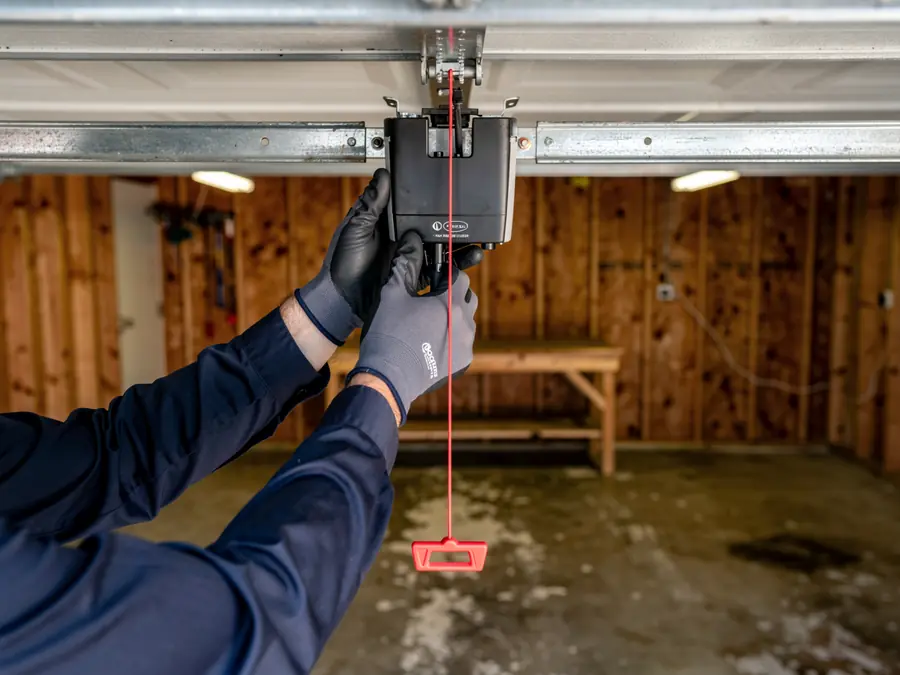
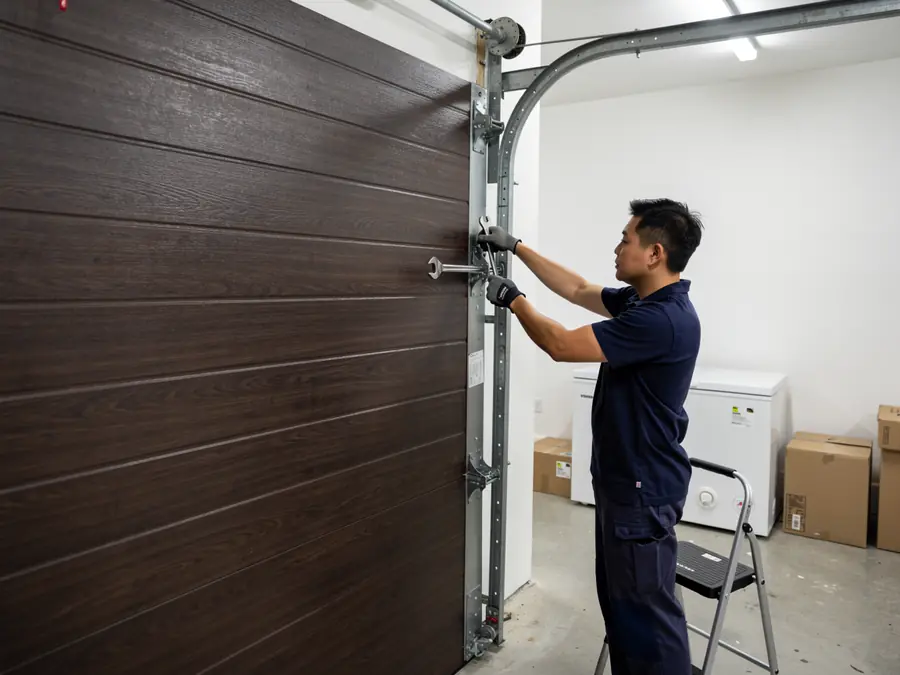
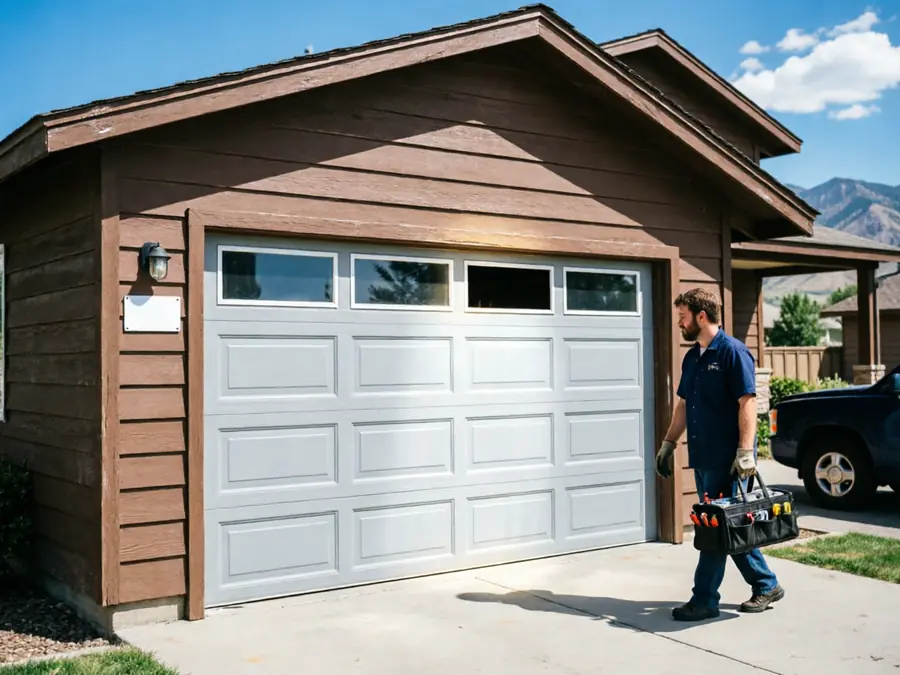
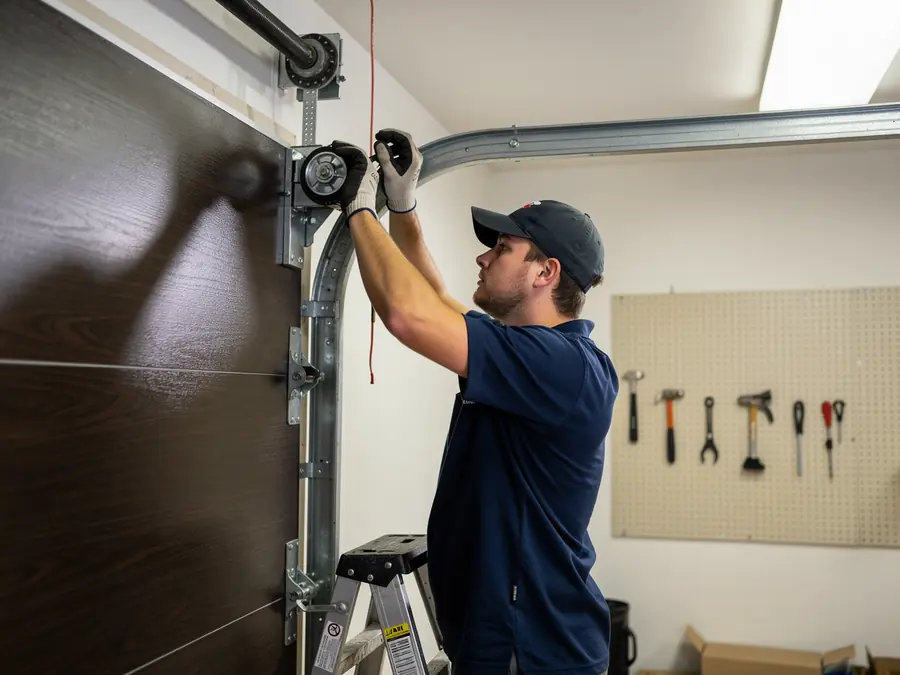
Most of the garage doors we replace in Coeur d'Alene aren't failing because they're cheap. They're failing because they're old. Housing across the service area went up mostly between 1950 and 2003, with a median build year around 1995, and six named neighborhoods still carry a heavy share of 1980s and 90s stock. Doors from that era were built to the standards of their decade, not ours: thinner steel skins, minimal or no insulation core, and hardware sized for a lighter panel than what you'd put in today.
That matters here because we sit in a cold, moderate climate band. A door built for a mild winter somewhere else doesn't hold up the same way against repeated freeze-thaw cycles on the track and hinges. Original single-layer doors from the 80s and 90s flex more in cold air, which stresses the seams, loosens fasteners, and eventually warps the panel enough that it stops sealing against the slab. The failure isn't dramatic. It's a door that gets harder to lift every winter until one day it doesn't move at all.
If your house falls in that original-stock window, the door you have now was probably never upgraded, just repaired piecemeal for years. That's the pattern we see most.