Single versus double door cost
A single 16-foot steel door with a basic opener costs less than a double door built for insulation, a quieter belt drive, and matching torsion springs rated for the added weight.
Hayden, Coeur d'Alene
Hayden homes mostly went up in the 1990s with builder-grade steel doors. Here's what a new install actually involves for this stretch of houses, four miles from Coeur d'Alene.
DIY or pro
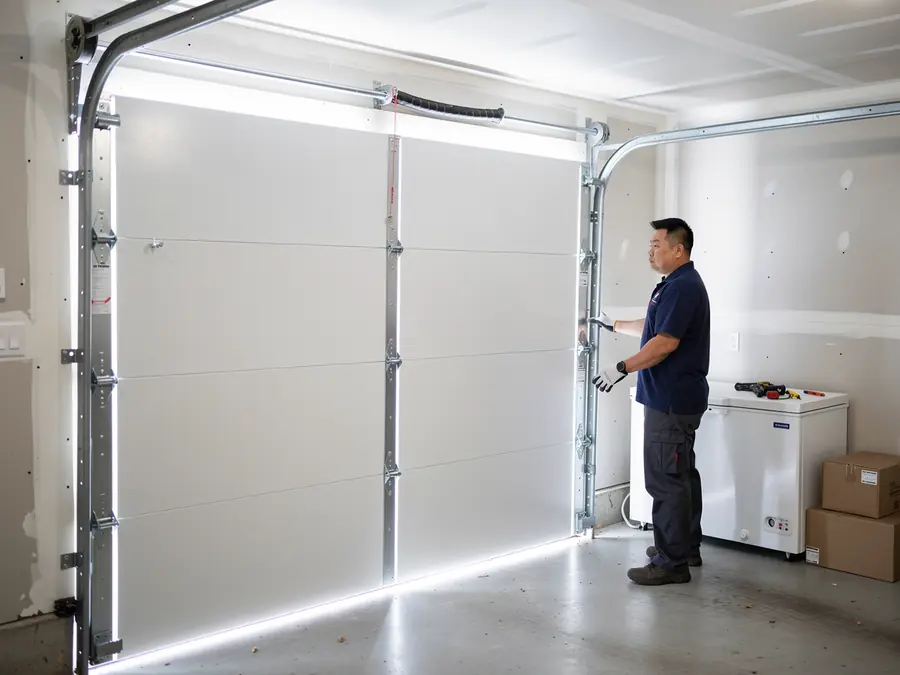
The fault in most Hayden garages isn't a broken part - it's the door itself. Median year built here is 1998, a touch later than the 1995 median for the wider service area, which means a lot of these houses still have their original builder-grade steel door: single-layer, no insulation, stapled weatherstrip that gave up years ago. Swapping that for a new door isn't a bolt-on job. You're dealing with jamb condition, header clearance, and matching spring weight to a door the original installer picked for cost, not performance.
Could a homeowner do it themselves? Setting the door panels isn't the hard part. Winding a torsion spring to the right turns for a new door's weight, squaring hardware that's sat slightly racked for 25 years, and getting the opener's force and travel limits set so the safety reverse actually works - that's where DIY installs go wrong, and it's not a place to learn on the first try. We've seen enough half-finished jobs to know the spring alone sends people to the ER more than anything else on a house.
Pricing
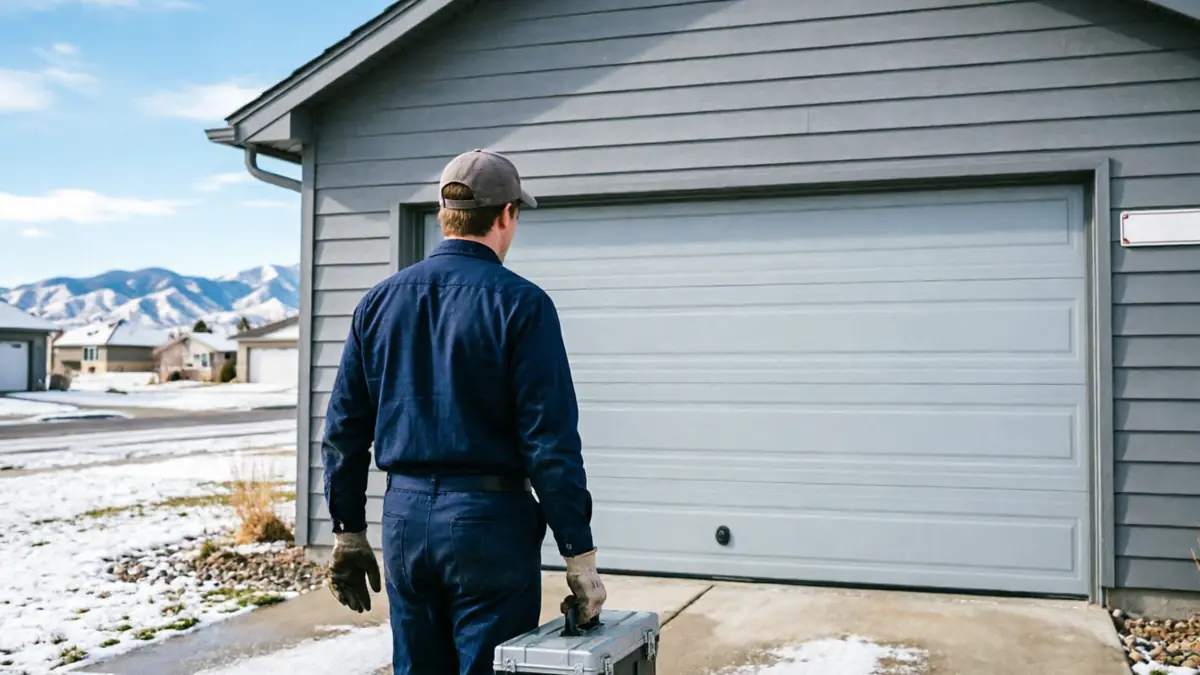
We're not going to put a number here that isn't backed by a quote, because the range on a new install swings hard depending on what's actually behind that old door.
A single 16-foot steel door with a basic opener costs less than a double door built for insulation, a quieter belt drive, and matching torsion springs rated for the added weight.
Hayden's median household income sits at $77,534, and most of the installs we see out this way land somewhere between a plain replacement and a step up to an insulated door, not the top of the catalog.
The honest answer: we measure the opening, check the header and track clearance, and price the door and opener together once we know what's there. Anything quoted before that is a guess, and we don't do guesses on spring-rated hardware.
Warning signs
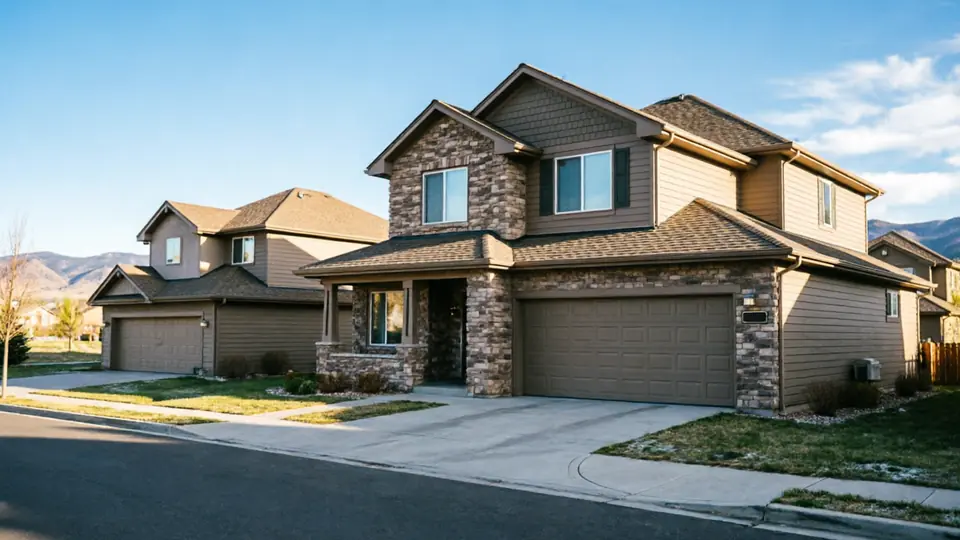
In houses from this era, the tells are consistent. The door itself may look fine from the driveway, but a non-insulated steel panel with no thermal break means the garage runs cold through winter - not frozen-pipe cold, but cold enough that anything stored against the shared wall with the house feels it. Rollers on 25-year-old hardware are usually the worn nylon kind, not sealed ball-bearing, so the door rumbles going up even when the spring and cables are fine.
A lot of owners call this in as an opener problem - the door seems to struggle or reverse on its own - when it's actually the door's weight creeping up from rust, dirt, and worn rollers adding resistance the opener was never sized for. By the time that shows up, the door's old enough that patching it doesn't buy much; a new install fixes the weight, the insulation, and the noise in one job instead of three separate calls.
Watch-outs
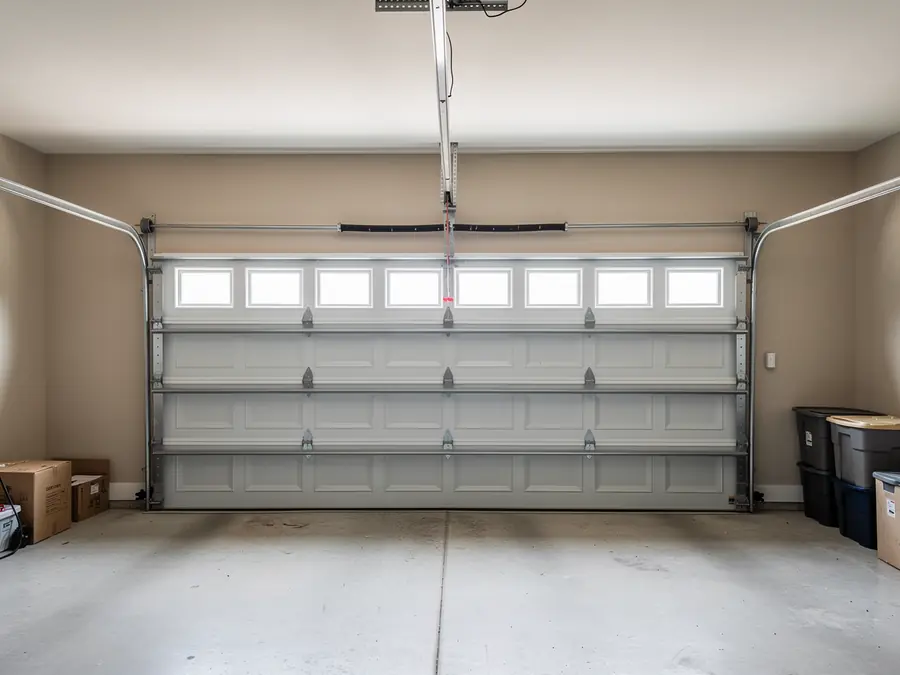
The two things that turn a straightforward install into a longer job are the jamb and the header. Houses built through the 1990s in this part of the service area used standard framing for the openings of that decade, and over 20-plus years a jamb can go slightly out of square without anyone noticing - until a new door won't sit flush against new weatherstrip. We shim and adjust for that, but it adds time.
The other issue is spring mismatch. A new insulated door weighs more than the single-layer panel it replaces, and reusing the old torsion spring because it "still works" is how you end up with a door that won't stay up or slams down hard. We size the spring to the new door's actual weight, every time, not to what was already on the track.
The repair
For a full install, we pull the old door, tracks, and springs, check the jamb and header for square and clearance, and set new vertical and horizontal tracks to the door manufacturer's spec.
The torsion spring gets sized to the new door's weight and wound to the right number of turns - not estimated. Opener force and travel limits get programmed and tested against the new door's balance, because a door that's out of balance will fight the opener's safety reverse.
Given the cold moderate climate this area sits in, insulation and weatherstrip fit matter more here than in a milder climate - we seal the bottom and side gaps so the garage actually holds the temperature gain the new door is supposed to give.
Limitation worth saying plainly: if the jamb is badly out of square, that's a carpentry fix before the door goes in, and that's outside what a garage door install covers.
Questions
Sometimes, but we check first. A heavier insulated door can exceed what an older opener is rated to lift safely, and the force settings almost always need reprogramming either way. If the opener's more than a few years old, we'll tell you honestly whether it's worth keeping or replacing alongside the door.
We don't quote a same-day window for this suburb since the crew drives in from Coeur d'Alene, four miles away. Once scheduled, a straightforward single-door install with no jamb issues typically runs under a day; double doors or framing repairs add time.
Given the cold moderate climate this area sits in, most owners with an attached garage or living space above it see a real difference switching from a single-layer steel door to an insulated one. If the garage is detached and unheated, the payoff is smaller.
At that age the door is past the point where parts are wearing evenly. Springs, rollers, and cables rated for 10,000 cycles have usually been through more than that. We'd check the spring and cable condition before recommending repair over replacement.
Explore more
Ready when you are
Coeur d'Alene Garage Door Pros repairs and installs garage doors, springs and openers in Coeur d'Alene, ID and the surrounding area.